My sister and I have disagreed about many important things in life.
Peanut butter: creamy or crunchy? (My sister: “Of course creamy. Butter doesn’t come with chunks of cow in it.” Me: “Mmm but it should.”)
Empire Records’ emo heart-throb A.J. or lovable goofball Mark? (Let’s just say I married an Ethan Embry lookalike on purpose.)
Best ninja turtle to walk down the aisle with: Leonardo or Michelangelo? (Adult realization: We were both wrong. Turns out nerd-boy Donatello and his Silicon Valley-aspirations made him the real catch.)
But this past week, a startling new difference between sisters became shockingly apparent: I think raisins are healthy, and she vehemently disagrees.
The goods.
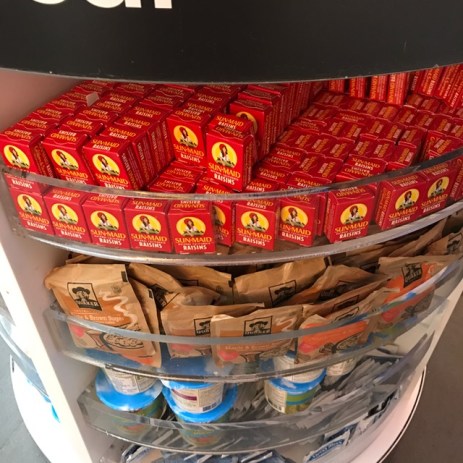
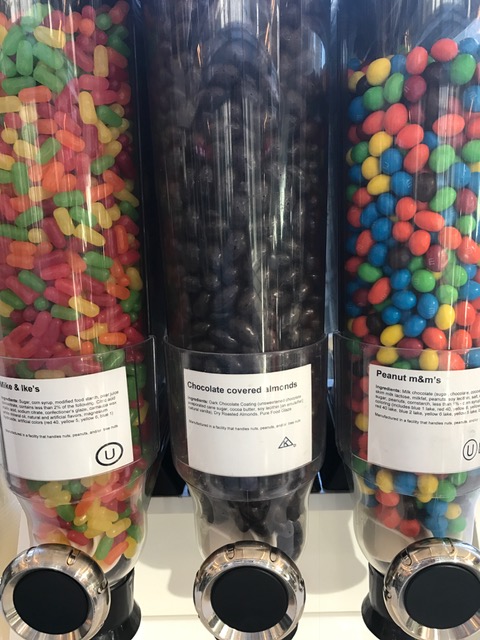
Raisins — the dried version of grapes and also a California-based musical act — have become my go-to afternoon snack when I need a sweet little pick-me-up. They’re delicious, they’re portion-controlled, they pack a lot of fiber and they’re undoubtedly better for me than the bulk-food candy offerings my company wheels out every day at 2 p.m. to wreak havoc on my blood sugar levels.
I’m only human!
I eat them straight, or I mix them into oatmeal, or I sprinkle them on celery stalks slathered in nut butter — heck, I’ve even carried them as natural fuel on some 15-mile long runs — but no matter how I’m imbibing, I’m probably eating raisins at least 6 out of 7 days a week. And I thought that was a good thing.
After all, they’re nature’s candy!
I told my sister about my increased raisin consumption as I tried to wean myself off my daily chocolate habit, and she — while supportive — was pretty convinced I was just trading one sugar fix for another.
And maybe she has good reason. Dried fruit is notoriously high in calories but low in the hydrating water content that helps give other fruit a reprieve. And raisins don’t start as some super-food produce either — they’re made from grapes, the one fruit Dr. Robert Lustig, a pediatric endocrinologist who runs a weight management clinic for children and families at the University of California, told the NYTimes he suggests his patients avoid.
“Grapes are just little bags of sugar,” he said in an interview that, let’s be honest, broke my grape-loving heart.
It didn’t, however, break my grape-loving habit, and I’m still eating grapes, raisins and — fine, wine — with abandon.
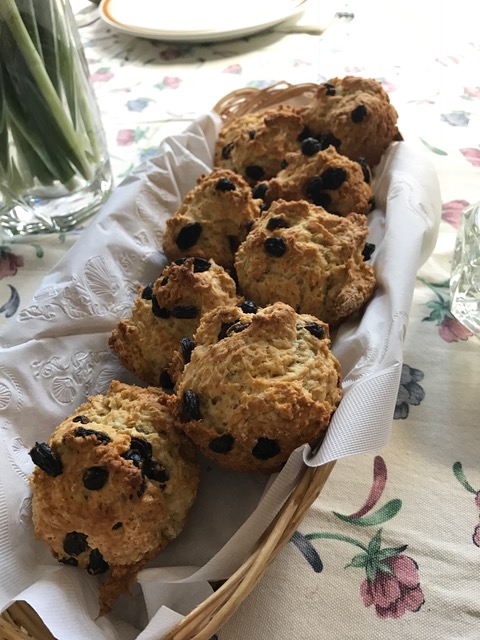
Because what’s March without soda muffins?!
So who’s right, here? Are raisins essentially sugar bombs in disguise, or did I make a smart swap replacing my afternoon candy binge with that sun-made goodness?
My parents encouraged team sports all childhood long, but like wearing my retainer and eating less butter, the pastime never really stuck.
Sure, I chased soccer balls in the fall and struck out looking each spring, but it became clear pretty early on that I wasn’t really of the team sport variety: I wasn’t a natural-born athlete, ducked when pop-flies came my way and happily spent most of my time warming the bench and/or eating orange slices at halftime without having even broken a sweat.
Androgyny is the new cool.They say team sports have all sorts of benefits for youth — they teach collaboration, boost self-esteem, foster clear communication — but I never loved the pressure of performing athletic feats in front of my peers the way some of my friends did. I tended to think exercise was best completed in solitude — plugged into an elliptical with headphones, say, or running five miles to the sound of my own footsteps — and that’s the position I’ve largely maintained these past 31 years.
So it came as a surprise to everyone — primarily me — when I accepted a friend’s invitation to join her indoor volleyball team this winter. It helped her case that she classified it as “very casual” and “likely to involve a decent amount of post-game drinking,” but mostly I said yes because I’d resolved at New Years to be more active this year in non-traditional ways. I’d expected that would mean trying new gym routines (success!) or walking more dogs (success!), but when the opportunity presented itself in the form of organized team sports, it felt like a sign from the universe that it was time to expand my comfort zone.
So I signed up, and — in a semi state of panic — arrived at my first match last month ready to embarrass everyone.
And you know what? I wasn’t as god awful terrible as I expected! I may not have a lot of hand-eye coordination and my erratic bumps tend to send the ball flying in any number of directions, but at least my serves score points and my 70″ frame means I can block a hit as it’s coming over the (arguably extremely low) net. Better yet, I’m getting fit in a new kind of way AND being social doing it, a win-win for this solitary runner.
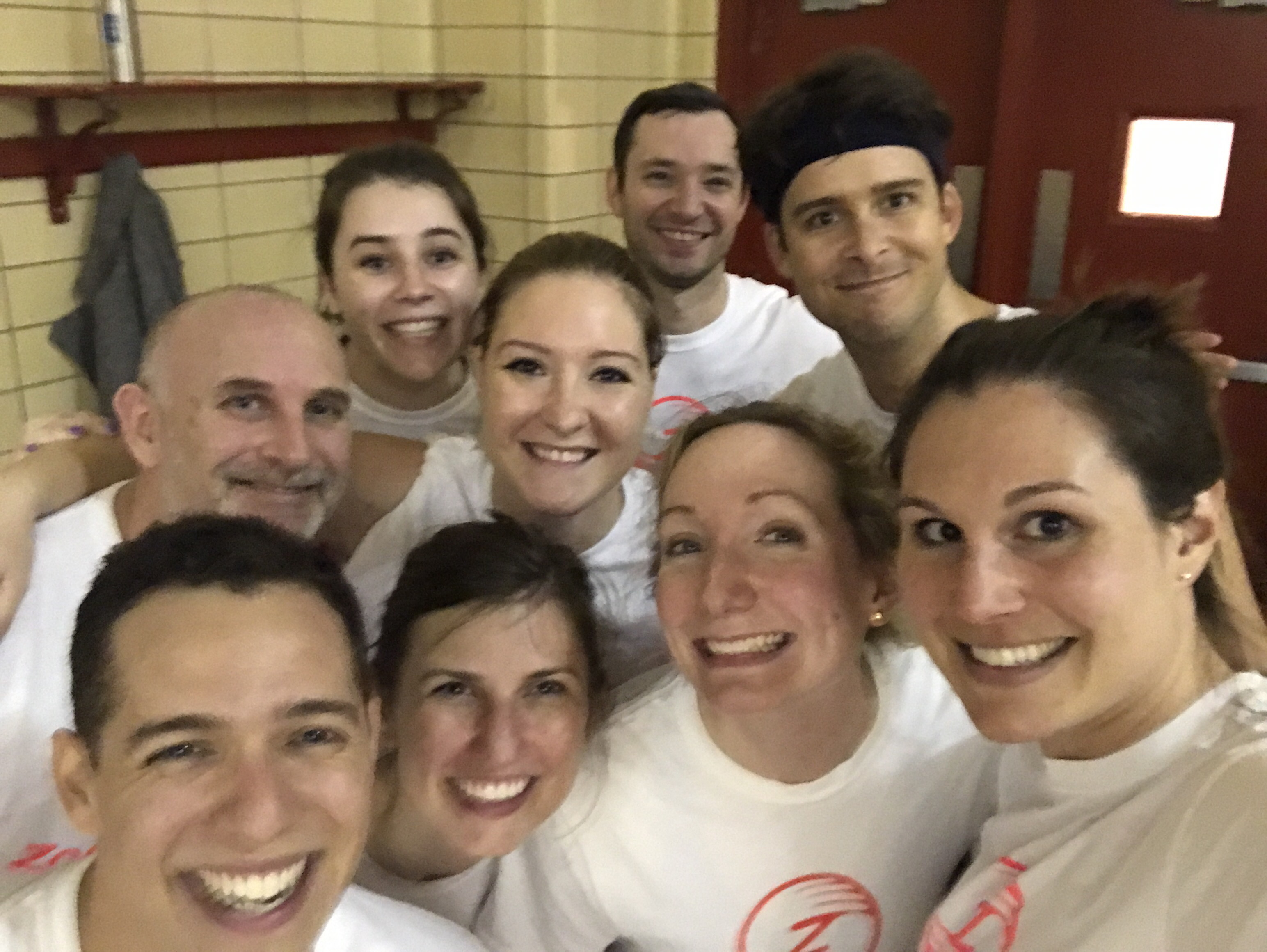
Let’s pretend this wasn’t taken immediately after I lost the game for everyone. Cool, thanks.
So is volleyball my new sport of choice, and will I be forgoing my weekend long runs for spiking practice and King of the Court? Heck no. But am I excited it looks like we might possibly eke out the final spot in the playoffs? You betcha. The funny thing about stepping out of your comfort zone is once you’re there, it’s tempting to stay.
There are a couple tenets of my workout policy that I’d thought were non-negotiables: always hydrate before a run, carry a $20 in case of emergencies, think heavily about stretching (though don’t actually do it) and wear a hat when the sun’s shining bright:
Keira says: “Haven’t you used this photo before? If only there were other dogs in your life you could photograph for blog usage…”
But the most sacrosanct principle of my fitness routine was always this: Permanently keep one foot on the ground. Or in other words, no aerial yoga, no box jumps, no aerobatics, no hang gliding. You heard me: Nothing that has this height-adverse athlete working against gravity, because, my god, up-high things are terrifying. (Kind of like opening my news app every morning to see what monstrosities I missed overnight. But I digress.)
So it must have been a bout of temporary insanity — or fine, the love of a good deal — when on Black Friday I signed up for a half-price 10-pack of visits at a local rock climbing gym. I assumed I’d never actually climb, but the gym also offered yoga classes at convenient times, and I’ve been aiming to freshen up my practice.
And for the first five visits, that’s all I did – downward dog (with two feet on the ground), upward dog (with two feet on the ground), talk about getting a dog (with two feet on the ground.)
But as I walked by the climbers each visit on the way to the yoga studio, I started to get envious. They all looked so cool and so calm and so collected and so badass. Even more important: a lot of them looked like me. I’d thought climbers would be all muscle with clear superiority in the upper body strength department, but many of the men and women I saw making their way up the walls looked, well, kind of normal. At least, as normal as you can look doing something so freakishly unnatural as the human body moving vertically.
Or vertically and semi-upside-down. I mean, seriously?
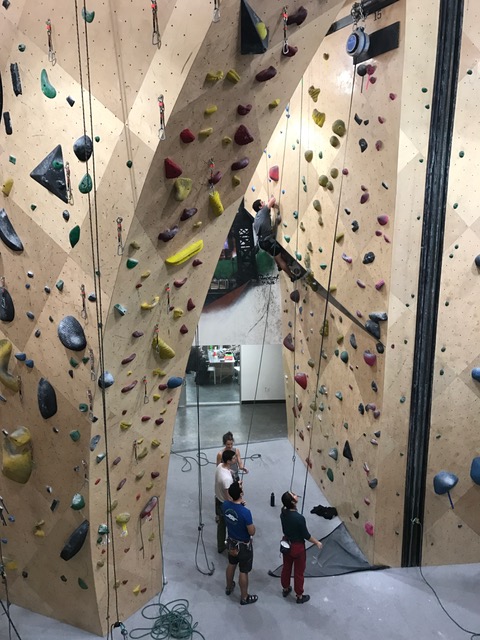
So I suppressed my fears and signed up for an intro climbing class, bringing a friend along to witness what I expected would be a 50-foot drop to my death. And you know what?
IT WAS TERRIFYING! But also super exhilarating. After we learned to tie ourselves into our harnesses and belay for our friends with two feet firmly on the ground, we hit the climbing walls. Most of the climbs, I — shaking with fear — asked to repel down only halfway up the wall, but a few times, I made it all the way to the top, and that was the Coolest. Feeling. Ever. So I went back last night and did it all over again.
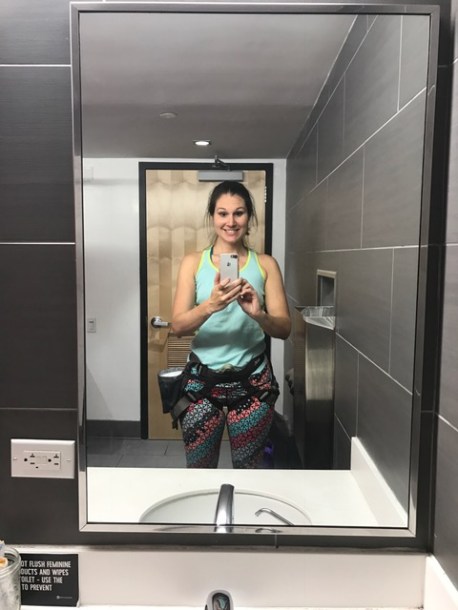
And wore this sweet harness.
I didn’t know what kind of workout rock-climbing would be, especially for someone as cautious as me, but it was definitely a sweat-inducing! Today, my upper back and forearms ache that way muscles only do after they haven’t been used in years. I’ve since done some googling, and it seems rock-climbing can burn as many calories as jogging per hour, plus it tones all kinds of muscles from your forearms to your calves to your obliques. Believe me when I say my typing muscles feel particularly warmed up this morning after gripping at tiny handholds for 60 minutes last night.
The best thing about rock climbing? Unless you like the auto-belay, which is a terrifying experiment in throwing yourself from a great height and hoping a machine catches you, you do most of your climbing with a belay partner — a cool experience for a solo runner like me who’s almost always working out in an isolated state. I befriended a couple in the intro class and convinced them to go with me again last night, and — Horray! — none of us dropped each other to our violent ends! Success!
I don’t think climbing will ultimately take the place of running in my heart — it’s too expensive long-term, requires too much gear and demands a bit more planning than just lacing up and running, but having another sport in my repertoire? It rocks.
Have you ever exercised against gravity? Sandra Bullock and George Clooney, I’m talking to you. #2013moviejokes #Ican’tbelievethatmovieisalreadysoold
Congratulations! You’ve now made your own chicken stock!
(That is, assuming you treat my blog like a life coach and did exactly what I suggested in last week’s post. And if you DO do everything I recommend in my blog, you should probably rethink your life choices… and return that golden doodle you stole.)
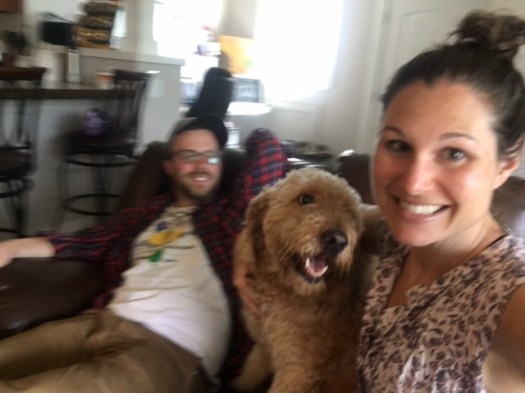
“Nah, I’m cool here.”
But really, this is the question I find myself grappling with every time I make homemade chicken stock. Now that I have it, what do I DO with it?
We all know chicken stock is great for us — it aids digestion, it’s rich with minerals, it helps beef up immunity against colds — but finding ways to use it beyond chicken noodle soup sometimes takes a little creative thinking. Fortunately, I’ve done it for you. Hashtag you’re welcome.
Here are a few ways I use up a big batch of broth, and I’m open to all your additional recipes and suggestions, because lord knows I can always use more.
Cook a giant batch of grains in it. We’re talking risotto, rice, quinoa, couscous, farro, bulgar, kamut, sorghum, boogabooga, or any number of other funny-named foodstuffs that are now in vogue. [Note: One of the words in that list is made-up. The rest are, amazingly enough, real words.] A big batch of quinoa cooked in broth tastes a million times more interesting than a batch cooked in water.
Boil up some lentils. The UN General Assembly declared 2016 the International Year of Pulses, and for good reasons: these little nutritional powerhouses are packing a healthy punch. Dried lentils are some of the most economic and greenest protein sources out there, so throw them into a pot of broth with a bay leaf and some spices, and let them amaze you.
Make some soup. But it doesn’t have to be chicken noodle! This butternut squash/pear soup from my mama’s repertoire is a delicious way to put your homemade broth to good use. Or try this paleo sausage and kale soup, which has graced our kitchen table at least forty-five times this winter.
Freeze it. When in doubt, load your broth into freezable containers and deal with it later. In addition to freezing cup and quart size batches, I also recommend freezing an ice cube tray worth of chicken broth. You can defrost these tiny portions quickly for when you need to deglaze a pan or braise greens or want to make a miniature bowl of soup for a mouse.
How do you put your wholesome chicken broth to good use? “I use it to lure away unsuspecting golden doodles” is a fair answer.
Anyone can make something from something. It’s making something from nothing that really impresses me.
That, and octopuses that can unscrew themselves from the inside of jars. You gotta admit that’s impressive, even with the eight-leg advantage.
When I say making something from nothing, I’m not talking about Kardashian careers or some dubious reporting on the worldwide web. I’m talking about making chicken stock.
For years, I purchased my chicken stock in tin cans from the local grocery store, aware that my recipes called for it but unaware that the store bought stuff wasn’t always so great. Often high in sodium and full of chemicals, commercially produced chicken stock isn’t necessarily the nutritional powerhouse I thought it was. If you don’t believe me, check out this ingredient list from Swanson, including MSG and corn syrup solids. Mmmm. Hydrolyzed soy protein.
As I became more aware of where my food comes from and why that matters, I started to make my own chicken stock. At first, I followed recipes from the internet that called for virgin ingredients like a pound of chicken wings, or a bag of carrots, or eight stalks of celery or two sliced carrots. Some even called for an entire, uncooked chicken, no joke.
But then I realized that that was a huge waste. Why use perfectly good food to make chicken stock when you can make something just as wholesome and nutritious using the (read: free) food scraps that you produce in the normal course of cooking anyways?
That’s right, folks: you can make stock totally out of leftovers, and your tastebuds won’t even know the difference. (Though your wallet will.) Here’s how it works:
1. Put an empty gallon sized ziplock bag in your freezer.
2. Every time you use an onion in your kitchen, add the onion skins and scraps to the ziplock bag. Every time you use celery in a recipe, add the leftover hearts and leaves to the bag. Every time you peel a carrot, add the peelings to the bag. (Though I mostly just wash my carrots, instead of peeling them, but that’s a blog post for another day.) In my experience, here are the veggies whose scraps are worth saving:
carrots
parsnips
celery
onions/leeks/scallions/chives/shallots aka all the alliums
winter squash
herb stems, especially the ones Simon & Garfunkel sing about
mushroom stems, though not the ones Led Zeppelin sings about
potatoes
garlic
corn cobs (seriously)
Skip anything really fragrant (I’m not mad about fennel or broccoli, for example), or anything close to rotting (don’t forget you’re going to eat the results), but most anything else is worth experimenting with. If you do a lot of cooking, you’ll be amazed at how quickly that bag fills up.
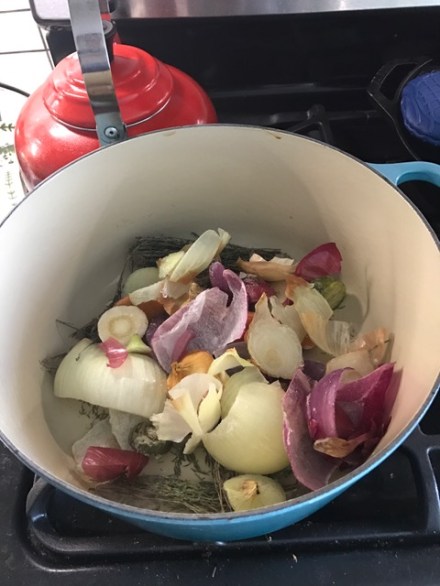
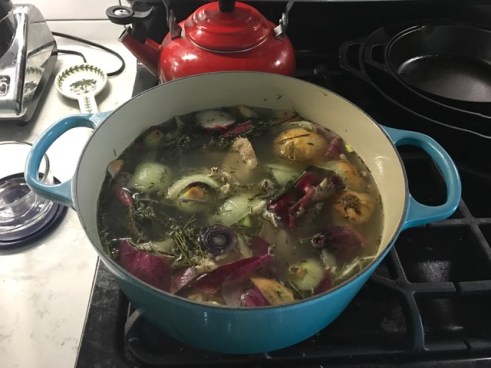
Onion skins! Thyme stems! Parsnip ends! Oh my!3. On the day after you’ve roasted a bird, or bought a rotisserie chicken, or somehow come across a bag of bones some other [legal] way, put the picked bones into a large pot. If you don’t eat meat, skip this step and just use the veggies.
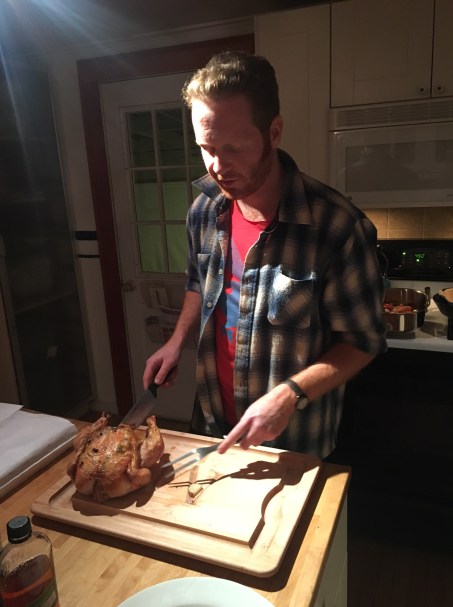
Bonus points if you can convince your chef friend to carve it for you.4. Add the frozen veggie scraps – several cups worth, hopefully – and anything else flavorful you have hanging around, like a few black peppercorns, a bay leaf or some garlic cloves. Skip the salt for now.
5. Cover the bones and scraps with cold water. I always add a splash of vinegar at this point, since I heard once it helps extract more nutrients from the bones, but I’ve never fact checked this and don’t intend to start today.
6. Bring the pot to a boil, then reduce to a simmer and cook on low uncovered for at least an hour, but go for 2-3 if you have the time and all your liquid hasn’t evaporated.
P.S. Everyone should register for a Le Creuset stock pot. I freaking love this thing.7. Strain the broth (I pour into the sink through a colander into a bowl to catch the liquid below) and throw away the bones/veggies, which have now been leached of their nutrients and aren’t worth reusing again.
8. Once the broth is cool enough to handle, I recommend pouring into 1-cup freezer containers that can be defrosted easily when you know you’ll need it. Other people store in plastic bags, which lie flat, but I’m not that fancy. Or, if you don’t want to freeze it for later use, cook with it immediately!
#storagesolutionsAnd, of course, step 9: Wonder why you’ve been buying chicken stock all this time when it’s so easy/cheap/hand-off to make yourself.
Do you make your own chicken stock? I’d love to hear from a convert who has finally taken the plunge!
If I were to compile my most-searched phrases on Google, it would probably look a little something like this:
Weather at 6 a.m. in Queens tomorrow
Crockpot meals that can cook for 12+ hours because who honestly is only gone from home for 7-8 hours a day?
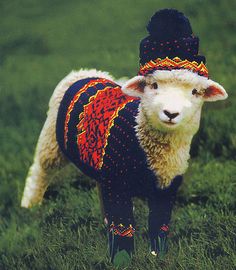
Photos of sheep in sweaters
And, of course, my undisputed No. 1 search term:
Can I still go for a run when I’m sick?
I probably search that last item at least once a month, even though I already know the consensus internet response by heart: “If it’s above your neck, run. If it’s below your neck, stay home.”
What that means in layman’s terms is a stuffy nose or some sinus pressure shouldn’t be enough to keep a runner inside. Of course, dial back your exertion levels, keep hydrated and stop if you feel woozy, but in general, a little head cold shouldn’t sideline a runner for long.
If it’s below the neck though, that’s where the advice seems to change. When it’s on the lower part of your body — stomach pains, bronchitis, organ failure — that’s where you’re supposed to draw the line and focus on getting well instead. (Note: I never know if a sore throat counts as below or above the neck. Do you know? This question is an especially poignant one for giraffes, I’m sure.)
Fortunately for me, 95% of the time I’m questioning whether I’m too sick to run, I’m actually not — I’m just stuffed up and looking for an internet-sanctioned excuse to stay in bed. But not this month. A little whining ahead, so I apologize in advance, but I’VE BEEN SICK FOR SO DAMN LONG! Seriously. I am sick and tired of being sick and tired.
First, I came down with a violent stomach flu just two days after returning from my honeymoon (THAT’s one way to lose the wedding weight!)
As soon as I got over that, I came down with heavy chest congestion and a gross productive cough
After 10 days of that, I now have a suffocating tightness in my lungs where I feel like I can’t catch my breath. I finally saw a doctor, who put me on a steroid inhaler and told me, much like the internet did, no running until I feel well. And she said that might be weeks. Weeks!
Normally, doctor’s orders to stay still might be a welcome opportunity to catch up on sleep (or Sherlock…), but the timing couldn’t be worse: I’m less than two months out from the New York City Half Marathon, which I HAD hoped I’d race and maybe even log a new PR. It’s such an inspiring race, looping Central Park, cutting through Times Square and ending by Wall Street, and I’d pictured myself doing track workouts and hill repeats to prepare. Now the only repeats I’m doing are to and from the medicine cabinet at work. (If only that were the only sentence you had to read about cabinets today! #politicsjokes)
Still, I’m trying to make the best of it. Even though I’ve been instructed not to run, I’m trying to keep at least the tiniest bit active, attending a weekly yoga class and still showing up to casual league volleyball to embarrass myself publicly. But it’s not enough, and I feel my muscle mass — and PR dreams — dissipating before my eyes.
Starting a piece of writing with a dictionary definition is a carnal sin in journalism, but I’m going to commit it anyways. Here goes.
The dictionary defines “honeymoon” as “a vacation spent together by a newly married couple.”
Honey, I imagine, refers to the sweetness of time passed together.
Moon, I assume, refers to the shape of one’s face after two weeks off a normal routine. Because, holy cow, a honeymoon is a decadent affair.
We’re talking flowing champagne, copious croissants, and more gelato than I’m proud to admit, plus very little incentive to stick to a workout routine, unless that routine involves walking up a hill to the afore referenced gelato store.
OK, fine, or walking up a hill to see this decent view.
And that’s OK. A honeymoon is by definition an indolent escape meant to let the newlyweds relax after the stress and strain of planning a wedding — no small feat, no matter what pinterest leads you to believe. So it’s totally OK to honeymoon and not eat any vegetables for two weeks, or to honeymoon and not do any workouts, or to honeymoon and not drink anything that doesn’t come out of a coconut.
But if your idea of relaxing and feeling good doing it IS maintaining a semblance of health, that’s OK too. I, personally, feel better — and more like me — when I’m at least keeping healthy choices in my peripheral vision, tropical weather and all. Which is why I made some (very modest, I promise you) efforts to be healthier while traveling down under with my husband — efforts that I’m going to share today with you fine folks if you care to read on.
Don’t get me wrong: I didn’t spend my two weeks in Australia training for a marathon or knocking my leafy green consumption out of the park. But I did make a few small, intentional choices aimed at keeping my body feeling strong and healthy while out of my time zone. These travel tricks are easy ones, and ones any traveler — honeymooning or not — could adopt to return home feeling a little less, well, engorged than might have otherwise been the case. Here goes:
Take a mid-vacation yoga class. Running or biking in a hot climate isn’t much fun, but yoga? That’s a workout made for vacationers. Most gyms or resorts offer free or discounted classes, or find a local studio in your host city. Many lend mats and offer a first class or even first week free, which is perfect for the traveler who will never come round for a second visit. I took two yoga classes in Australia — one on the deck of the Hamilton Island Yacht Club on Christmas morning and another at a swanky Surry Hills studio in Sydney — and my stretched out legs thanked me when I re-boarded that 20 hour flight home.
Downward facing dingo, amiright?
Diversify your routine. Laying on a pool deck is one of my all-time favorite past times, but sometimes you want to work up a sweat while soaking up the sun. So why not rent a stand-up paddle board? Take out a kayak? Borrow some snorkeling gear? You’ll have so much fun taking in the sealife that you won’t even realize you’re burning off your breakfast via non-motorized watersport.
Fact: You burn more calories when you’re terrified of being eaten alive at the Great Barrier Reef.
Explore on foot. Taxis and subways have their place, but if you’re exploring a fairly safe city and you have time to kill, why not venture out on your own two legs? Just exploring Sydney, we walked upwards of five miles a day, which allowed me to justify the many, many days I thought about going for a morning run and then rolled over and went back to bed.
Explore and you might stumble across views like this. Or you might get blisters. Both cool though.
Get caught up on sleep. The experts agree: rest is one of the most important components of any training plan. So take it to heart! Sleep in, get a massage, take afternoon naps, and love every second you get to spend in your borrowed Australian hammock. Rest may not qualify as a workout, per se, but it will help you return to the real world ready to tackle those training plans head on in a way your pre-vacation mind couldn’t have even fathomed.
Shhhh, it’s naptime. (It’s always naptime.)
And if you make it all the way through your vacation without remembering to incorporate any of these healthy tips?
You can always stop by Hawaii for a quick walk with your best friend on your journey home.
TOGETHER AGAIN!
How do you keep fit — even marginally — while traveling?
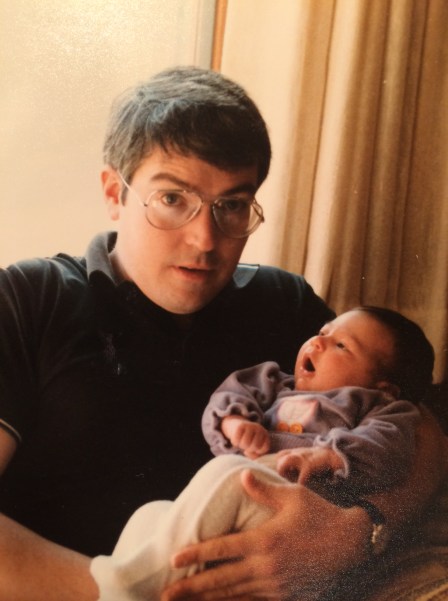
Below is a guest blog post from a family friend Vaughan, who has forgotten more marathons than I’ll ever run and who writes the best race recaps this runner has ever read. Vaughan came and cheered me on at the Philadelphia Marathon in 2014, but he’s actually been my cheerleader for 31 years, as evidenced by the following photo.
Cool hipster glasses, bro.
I hope you like reading about his recent marathon success as much as I did. Enjoy!
“Hyphenated. Non-hyphenated. There’s irony for you.” -Anonymous.
There’s irony as well in an over-60, injury-prone, junk-food fixated runner (who not six months ago ran a marathon in Anchorage without a watch because he’d left his Garmin behind at his step-children’s house) presuming to give tips on injury prevention, diet and logistics to what I imagine is an overwhelmingly young, healthy, food-conscious and cognitively focused readership.
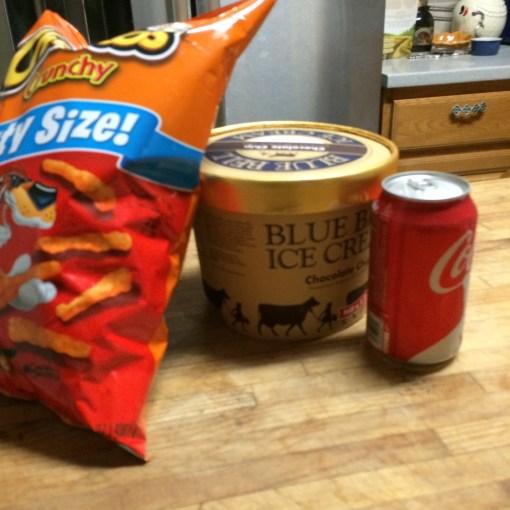
That said, a grateful shout-out to RiledUpRunner for having entrusted her blog to my tender care during a portion of her South Seas honeymoon sojourn. I’ll make sure it behaves, takes its vitamins, keeps its room clean, etc. And while I won’t pretend to be as up-to-speed as Anne on the proper nutritional do’s and don’ts of running, let me insert my two cents’ worth (and give you a ha’penny change): Try to avoid the foods shown here, because what’s known as the “dense nutrition” factor is a little suspect:
I borrowed these props from a friend. No kidding, really. (Wow, never thought living in a post-truth world would be this easy!)
I want to tell you the story of my most recent marathon, the San Antonio Rock’n’Roll on Dec. 4, but to do so, I first need to explain to you a science program I watched on C-Span the day before the race, something with Neil deGrasse Tyson and a panel discussing black holes. (Stick with me: this relates to the race.) One of his guests used the image of a spacecraft orbiting near the event horizon and then getting pulled in while trying to send out a final message: “Things are nnnnnnnnnnnn………..” It represents an attempt to broadcast a final message that things are not going at all well, but the transmission is caught in the gravitational pull and essentially frozen in time. That’s how I describe my lucky thirteenth marathon – one long keening vibrating anguished wail trying, through the boundless Einsteinian loop of space-time, to make it out of my throat and past the gate of my clenched teeth.
Fortunately for you and me both, the strictures of editorial space-time mean you’ll get the highly abbreviated version of my race recap.
After having wrapped up my first injury-free training cycle in three years, with a strong long run just prior to taper, I figured I’d have no natural enemies this time unless the weather decided to act up. I hate it when I’m right. It was a cold, wet, altogether grim weekend, but by early Sunday morning the rain had stopped. That reprieve lasted until just a few minutes before the starting gun, when the sprinkle started up again. I had my watch this time, but I thought it the better part of valor to attach myself to the 4:00 pace group and trust someone else’s skills on that score. The 4:00 pacer being a no-show, Plan B was to run with one of my class buddies there in Corral 5 for as long as I could keep up with him. About half a mile out, someone came up to us and asked if we knew how long it had been since the starting gun – he turned out to be the 4:00 pacer — and then, as if on cue, came the deluge.
It lasted close to two hours – the cold rain, that is; the flooded streets and the run/wade biathlon lasted the entire race. At Mile 18, I dropped out of the pace group and went into a 10-minute-pace survival mode, which soon degraded further into a run/walk. By Mile 25, I was really, seriously wishing that Phidippides had just e-mailed that damn battle report to the Athenian council and had done with it.
Then, up ahead, I saw my class trainer, Coach Tina, waving and calling out to me. (It turns out she had just run a 1:51 half, through the worst of that soggy muck, and had stuck around to help pull in her lost lambs who were doing the full.) She ran with me the last segment, talking about heart and not giving up and stuff. About a couple of hundred yards out she said, “There’s the chute – this is as far as I can go. You can DO IT!!” And then Coach T – who weighed maybe a hundred pounds after absorbing all that rain – put her left hand on my back and the next thing I remember was a Saturn V thruster shoving me toward, into and past the finish line. Gravity? We don’t need no stinking gravity!
The moral of the story, nieces and nephews, is two-fold. First, infinity has an end. So did this marathon. The next one will be infinite too, of course, until it ends, and so too the one after that; there will be rest for the weary, but be ready to wear yourself out again.
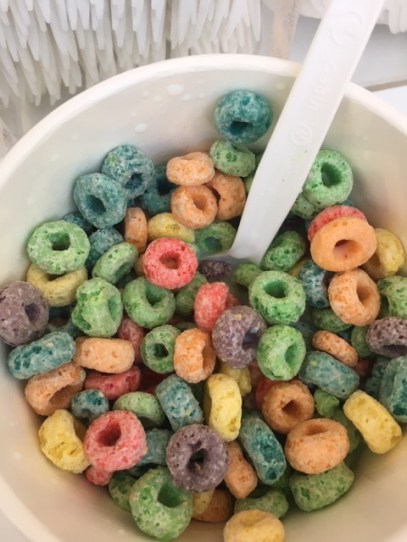
The second part of the moral is that readiness involves listening to people who actually know what they’re talking about. Get your nutritional advice from somebody like Anne, who knows this stuff because she does it and lives it – do NOT listen to a guy who even knows where to find Cheetos and Blue Bell ice cream. (OK, maybe the “Cereal Girl” thing is a bit counter-intuitive, but I still trust her judgment.)
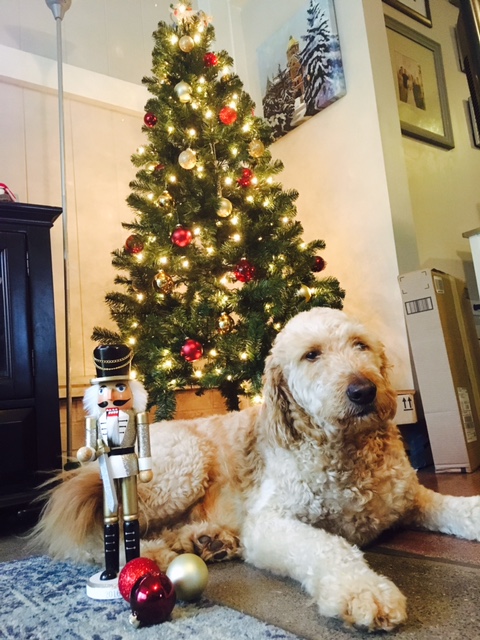
What I can do for you while she’s away – even though I’ve no goldendoodle to call my own – is share a shot of two of the three members of my own four-legged cheering section. They’re no substitute for Keira, I know, but they’re my own blond baby-direwolves:
(l to r) Daisy and her older sister Shemp, the latter named more after my “Legalize Shemp” poster than after the Stooge himself.
Has the concept of infinite space-time ever messed with your head during a long race?
Growing up, I never thought I had a sweet tooth. Sure, I liked Klondike bars with the rest of the 80s kids (and I guess I’ve already revealed my propensity for cereal) but set me free in a candy shop and I’d usually gravitate not toward the jelly beans but to the single bag of salt and vinegar potato chips up by the register.
Salt, not sweet, has traditionally been my flavor of choice, so it’s been strange to me that in the weeks since the wedding, I simply can’t stop craving sugar.
Mine! All mine!
Normally my survival strategy for avoiding unhealthy foods is to just keep them out of my reach: the old “no cookies in the house, no cookies in my belly” diet routine. But there’s one time of year when that’s simply not an option, and it’s upon us: The holidays!
Nutrition bloggers the whole internet over will give you tips for keeping your sugar intake down between Advent and Epiphany, and I’ve even joined them in holiday seasons past. Some of the tips are good ones, like avoiding non-special holiday food (i.e. tree-shaped pretzels) you can eat any time of year, but other tips, like not even letting baked goods into your home, simply don’t make sense.
Why, you ask? Because I like baked goods! And I like holiday flavors! And I like sugar! And if someone gifts you a plate of homemade cookies, you’d be a real Grinch to decline.
That said, there are ways to have your cake and eat it too, or — since that idiom never made any sense — have your holiday treats and keep them from being total and utter sugar bombs. How, you ask? Cook them yourself.
Now I know between all the wrapping and caroling and decking the halls you won’t have time to bake all the holiday classics alone, but even opting to bring one (slightly) lighter dish to your next seasonal fête can be a smart move in waistline preservation. And that doesn’t always mean starting with a Cooking Light recipe. Sometimes, with a little practice and experimentation, you can take a traditionally heavy recipe and lighten it up with a few key substitutes.
When choosing what dessert recipe to make, I always look for three things:
Can I swap out any of the white flour for whole wheat flour?
Can I swap out any of the vegetable oil or butter for applesauce or yogurt?
Can I find a way to incorporate fruit or nuts, even if they aren’t in the original recipe?
Now I know some bakers are turning in their graves, because these swaps won’t work for every dish. Some delicate nibbles would get too heavy with whole wheat flour, and some classic cookies wouldn’t crisp up without good old fashioned butter. But other recipes are pretty forgiving of swaps like these, especially bars and loafs with a little more give.
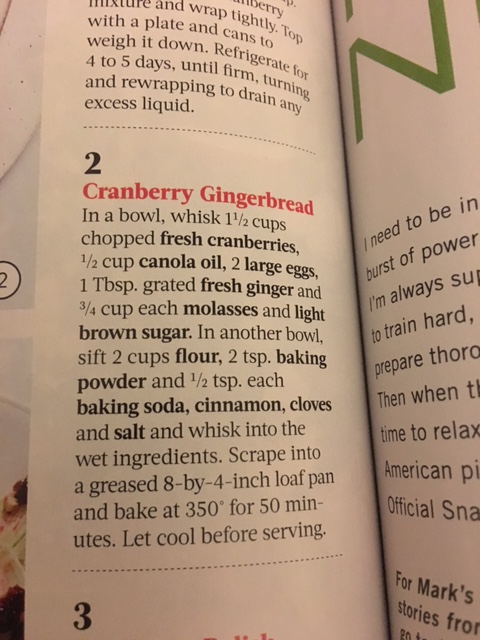
Take, for instance, the gingerbread I made last weekend from a Food & Wine recipe:
Thanks, F&W! Copyright here.
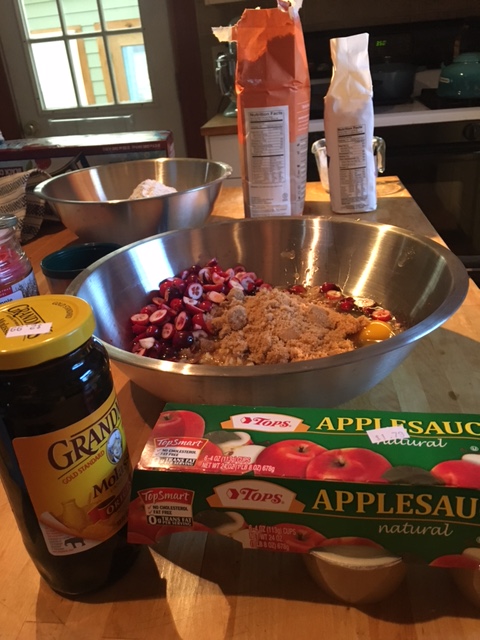
I was first drawn to it because it already meets requirement three — it includes fruit. And since it’s in loaf form, I knew it would take more kindly to swapping out half of the flour for whole wheat flour. (I chose to do a mix to keep it from getting too dense while also getting most of the fiber and nutrition the wheat variety brings.) Canola oil is already one of the healthier vegetable oils, sporting low saturated fat content and some Omega-3 fatty acids, so I only swapped half of it — substituting one 1/4 cup for the same volume of unsweetened applesauce. And obviously, I kept the sugar content at full tilt. I’m not a monster.
Bonus view of my new country house kitchen!
Now I didn’t remember to take a photo of the end product, but it was delicious indeed. And while no one could argue it was the healthiest dessert, knowing that some wholesome goodness went into it made me feel a little less guilty about having a slice of gingerbread smothered with beef stroganoff for breakfast the next morning. (No, I’m not pregnant; I just have unique tastes in food.)
It’s only December 17, so why am I giving you my holiday post today? I’ll tell you why: because I won’t be anywhere near a computer when actual Christmas week rolls around. Ben and I will be on our honeymoon down under, putting all my good advice aside and consuming our weight in beachside cocktails and kangaroo burgers. Don’t worry: I’ve arranged a guest post to publish on Boxing Day to give you a little taste of running inspiration while I’m out of pocket.
In the meantime, have a very happy holiday, folks! I know I will — I’m seeing this babe during a layover in Hawaii tomorrow!
Although my wonderful parents undoubtedly hoped fun family outings and visions of sugarplums would dominate my childhood memories, I’d wager at least 40% of my youthful remembrances are about none other than cereal.
And I’m not talking about the podcast.
Yes, you heard me right. That crunchy, processed, sweet breakfast staple of the 80s and 90s was a huge part of my childhood, and it’s present in an alarming number of memories from my formative years:
I remember Mom traveling out of town and Dad conspiratorially scooping a giant ball of mint chocolate chip atop my Frosted Flakes.
I remember whipping up a batch of peanut butter-Cheerio bars between Full House and Family Matters for our TGIF snack.
I remember realizing my then 14-year-old sister was a bona fide adult when she stopped eating Crunch Berries and started requesting the very grown up Raisin Nut Bran as her breakfast of choice.
I mean, my brother and I literally played a cereal-themed computer game called Chex Quest for years that we got in a cereal box in 1996. Let’s all process that for a second.
In my family, weekends were for waffles, but every Monday through Friday, the cereal boxes made their way to the breakfast table en masse. We’d read the backs of them, we’d jostle for the toys inside, and then we’d head off to school, only to do it all over again the next morning. And so it continued for years and years, but then something crazy happened: cereal stopped being my breakfast of choice.
I don’t know what ultimately did it — maybe it was my newfound understanding of protein and fiber, maybe it was the fact I’d moved to the city of bagels, maybe it was that cheesy eggs seemed a better cure for the hangovers of my early 20s — but somewhere along the way, I stopped eating cereal.
And it turns out, I’m not alone. With the rise of low-carb diets, eating on the go and America’s fascination with Greek yogurt, good old milk & cereal has had a tough go in recent years. I realize my instagram isn’t scientific, but I definitely see more pictures of chia seed pudding and eggs Benedict than I do bowls of Raisin Bran, and I bet you a box of Cinnamon Toast Crunch that you do, too.
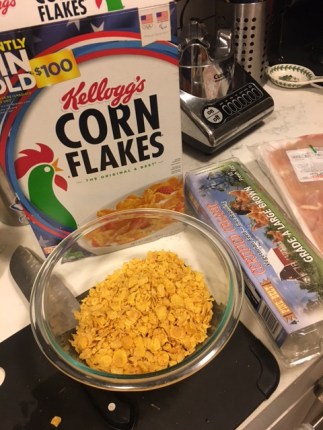
That said, I think cereal can still have a place in an adult diet, even for an adult like me trying to limit the intake of processed foods. In fact, one of the best recipes in my repertoire sports breakfast cereal as one of its main ingredients. The recipe, inspired by the other great Anne blogger on the internet, is always a crowd pleaser, and if you’re looking to get some Kelloggs back into your diet, here’s a delicious way:
Cornflake-Crusted Chicken Fingers
Ingredients:
1 package chicken breast or, if you’re super lazy/brilliant, already sliced chicken tenders
1-2 eggs
1 T hot sauce or dijon mustard
2 cups cornflakes, crushed
a mix of your favorite spices to taste (I usually do garlic salt, paprika and black pepper – 1/4-1/2 teaspoon)
Preheat oven to 375.
In a shallow bowl, add your spices to your crushed cornflakes.
In a different bowl, crack your egg(s), and stir in with a fork either the mustard or hot sauce to give it some flavor.
Once your chicken is tender sized, dip each one individually in the egg and then into the corn flakes, coating completely.
Place the coated chicken on a sprayed cookie sheet, then bake about 12-14 minutes or until cooked through.
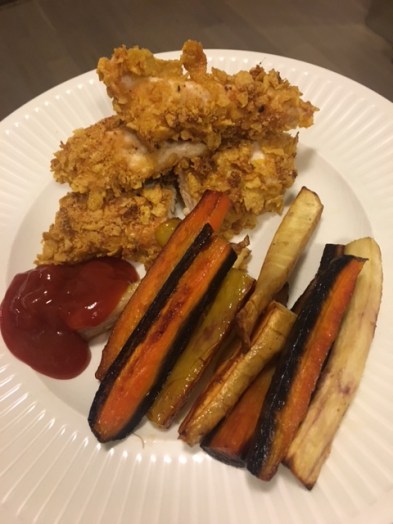
Enjoy, in this case, with roasted carrots and parsnips.
This recipe can be tweaked in so many ways: when I was on Whole 30, I used flax seed and unsweetened coconut instead of cornflakes; when I was at the new house without any spices, I crushed up a bag of Old Bay potato chips and mixed them into the cornflake mixture for flavor; when I’ve found myself eggless, I’ve used yogurt instead as the pre-cereal base. Either way, it’s an easy, delicious meal, and one I hope will find its way into some of your kitchens as well.
What are you cooking with cereal these days? If your answer is rice crispy treats, please come find me immediately. I want one.













 Riled Up Runner