Running on Empty

If you’ve ever seen a Tom Hanks film, you’ve probably come to believe that all the best things in life happen when you’re supposed to be sleeping.

(If you haven’t seen a Tom Hanks film, sign offline immediately, rent BIG, hop the NQR to 59th St. to play the giant piano, and then we’ll talk.)

Case in point:

  • If you’re Joe Fox, all the best e-mails from your dial-up pen pal arrive when your soon-to-be-ex-girlfriend is sleeping in the next room.
  • If you’re Forrest Gump, the only time it stops raining in Vietnam is after the stars come out.
  • If you’re Sam Baldwin, well, I’m not sure on this one. I think something transpires during a bout of insomnia in Seattle, but I couldn’t be sure.

Tom, as he’s asked me to call him, isn’t the only one romanticizing sleepless nights. “We stayed up all night talking” has become a telltale description of the perfect first date. Ask a friend what he did last night and he’ll tell you he stayed out ’til dawn like it’s a badge of honor. Spend a month in a coma as Peter Gallagher and watch your possible future wife fall in love with Bill Pullman right before your (closed) eyes.

What’s that? You haven’t seen While You Were Sleeping either? That’s it. Get out.

But while rom-coms coast to coast may be idealizing sleeplessness, the truth is a good night’s rest is just as key to marathon training as your weekly long runs. How do I know, you ask? Because, until this weekend, I hadn’t had one in a long, long time.

Is it naptime yet?
Is it naptime yet?

As I’ve mentioned once or twice in recent pity party posts, I’ve had a busy summer, complete with 30-mile weeks, a new job and so much travel I can almost justify having not yet unpacked my suitcase – from June. It’s been a blast, but it’s also been exhausting, and one of the first things to go this season was my coveted eight-hour sleep cycles. “It’s fine.” I told myself. “Seven is totally the new eight.”

Unfortunately, seven is not quite enough for my body’s needs, nor is six and a half, which seven usually becomes by the time I finish trolling the internet for lists of top 25 camels in rollerblades. Every hour I save not sleeping is another hour I can get things done, I thought, but instead, I find myself groggy, unfocused and shorter than usual with the people I love. My running has suffered, too, with my tired self crossing the finish line at last month’s Battle for Brooklyn at 1:23.07 – not a shameful finish by any means, especially considering my fatigued mind had left my Garmin watch at home, but nowhere near my 10-miler PR of 1:17.45 logged in Philly last spring.

It turns out, Runner’s World is right: “Sleep isn’t a luxury – it’s a training tool. Running on empty won’t get you far.”

But running isn’t the only thing that suffers when you push back your bedtime. Your eating habits also go by the wayside, according to both this unfortunately factual New York Times article and my chocolate consumption this past week.

The research showed that depriving people of sleep for one night created pronounced changes in the way their brains responded to high-calorie junk foods. On days when the subjects had not had proper sleep, fattening foods like potato chips and sweets stimulated stronger responses in a part of the brain that helps govern the motivation to eat. But at the same time, the subjects experienced a sharp reduction in activity in the frontal cortex, a higher-level part of the brain where consequences are weighed and rational decisions are made. … A sleepy brain appears to not only respond more strongly to junk food, but also has less ability to rein that impulse in.

Or in other words, a lack of shuteye can cause even the most rational individual to eat everything in sight.

I'm getting some nutty undertones.
I’m getting some nutty undertones.

I’ve set a lot of goals for myself this year – get a new job (done), set a new marathon PR (in progress), wake up just once without crumbs in my bed (it’s best we don’t address this one) – but here’s one more to add to the mix: work harder at prioritizing sleep. Starting right now. Or, more likely, starting right after reading “10 Llamas Who Wish They Were Models.”

How do you find sleep – or lack thereof – impacts your performance?

Making Time

When people ask me how I make time for marathon training between my 12-hour workdays, active social life and inconvenient need to sleep, I usually tell them what more experienced athletes have told me:

“We make time for the things that are important to us.”

As I’ve already preached on these very pages, it’s simply impossible to have it all during peak marathon training, and some tier-two interests – in my case: television, mid-week happy hours, recipes with more than three ingredients – have been temporarily relegated to the backburner as I focus on the more important things in my life. Indeed, if you’d asked me earlier this summer how I’m able to fit it all in, I would have told you things like:

  • set your priorities and be willing to give up some small-scale time-guzzlers (good-bye Food Network marathons)
  • master the art of social fitness (hello long runs with friends)
  • be kind to yourself trainingwise when you fall off the wagon (and/or drown fording the river. Seriously, what were you doing on a wagon?)

You’re going to have to make some changes,” I would have told you. “But don’t worry. We make time for the things that are important to us.

That’s what I would have told you.

I would have been lying. Or at least not telling you the entire truth.

Now, I’m not saying the above lifestyle tweaks aren’t essential in marathon training; they unquestionably are. Resetting your priorities so you choose an evening tempo run over a midtown open bar is a crucial first step to reaching all 26.2 of your goals this marathon season. But these kinds of lifestyle tweaks – scheduling, prioritizing, multitasking – will only get you part of the way there, and pretending they’re enough to push you through to the finish line is doing us all a disservice because it leaves us feeling inadequate when the rest of us can’t, in fact, squeeze in all our top-tier priorities.

“Making time for the things that are important” only works if your list of important things is very brief indeed: running, eating, sleeping, a spattering of friends. On top of that, I’ve even managed to fit in a weekly date night, a phone call with my sister and the occasional weekend brunch. Looks like I’m winning.

But you know what hasn’t made the cut? A lot of other things that are also very important to me. Reading books. Cross-training. Sleeping more than 6.5 hours a night. Shopping at the farmer’s market. Baking. Spending more than 90 minutes a workweek with my boyfriend. Blogging well, as evidenced by my latest post. Sorry if it felt like it was written on 4 hours of sleep. It was.

Also gone? Some less tangible features I once enjoyed. The ability to be spontaneous. That wonderful feeling where you wake up in the morning refreshed. Getting to answer the question: “What’d you do this weekend?” with a big ‘ol: “Nothing.”

If you’ve read my blog for awhile, you know this is the point where I usually like to step back, offer a solution to my conundrum and make some kind of broad-sweeping resolution to myself so each entry ends on a conclusive note. I’m not feeling strong enough? I resolve to start lifting! I’m not racing fast enough? I resolve to do more speed work! I’m not blogging creatively enough? I resolve to include more complex camera angles in all future goldendoodle graphics.

Objects in the mirror are slobberier than they appear.

But the truth is, I don’t have a solution. Until at least November 3, my training is going to keep being intense, my workdays are going to keep being long and my social calendar is going to keep being double-booked. But maybe it’s that one glossed-over phrase – “until at least November 3” – that’s crucial here. Maybe there isn’t actually a solution to this feeling of being in pulled in too many directions other than good old time herself. Maybe waiting it out is the only answer.

As Solomon or English poet Edward Fitzgerald or Abraham Lincoln (make up your mind, Wikipedia) once said, “This too shall pass.” Or as Avenue Q (consequently Lincoln’s favorite play after Our American Cousin) puts it:

Nothing lasts
Life goes on
Full of surprises.
You’ll be faced with problems of all shapes and sizes.
You’re going to have to make a few compromises…
For now.
But only for now.


Ten weeks until the marathon. And go.

Runners, how do you make time for the important stuff when there’s too much important stuff and not enough time?


The Real Deal

If Family Feud were to survey 100 runners making their way ’round Central Park tomorrow morning, I’d wager at least 20 percent would not characterize themselves as a “real runner.”

Central Park from the Met. Or maybe Central Park from my photographer bird friends. I'll never tell.
Central Park from the Met. Or maybe Central Park from my photographer bird friends. I’ll never tell.

One in five in-the-moment runners not self-identifying with the sport? It may seem outlandish, but just try to tell me you haven’t heard a friend or co-worker recite some variation of the following phrases since the weather turned warm:

  • “I’m not a real runner. I only get out a couple of miles a week.”
  • “I’m not a real runner. I race at a 12-minute pace.”
  • “I’m not a real runner. I’ve never done a marathon.”

Everywhere I go, it seems runners are telling themselves they aren’t “real runners.” Whether it’s because they don’t think they’re running fast enough or don’t think they’re running far enough, runners all over are denying their statuses as members of the running community simply because they don’t believe their level of achievement has earned them acceptance. And it’s never other runners telling them they don’t count as a “real runner.” This kind of exclusion can only come from within.

Well, enough already. If you run, you are a runner. End of story.

If you don’t believe me, just ask my favorite running columnist Marc Parent, who summed up my thoughts exactly in his recent Runner’s World piece, “You’re a Real Runner If…” According to Parent, it doesn’t matter how far or fast you run:

You can call yourself a runner when it’s easier to jog short distances than to walk them. When your shoes wear out before they get dirty. When sweating becomes so familiar it’s a nonissue. When quenching your thirst takes two glasses of water. When socks become a point of discussion. When you get the bright yellow shirt so cars can see you. When people stop asking you about running.

Or my favorite line:

Only a runner lies awake in bed and randomly thinks, My God, I just ran ___ miles! Assume you’re a runner if you’ve ever thought this. The number of miles is not important. What’s important is that the thought has replaced My God, I just ate ___ Oreos!

(I identify as both a “real runner” and a “real snack food enthusiast,” so sometimes I think both. Don’t judge.)

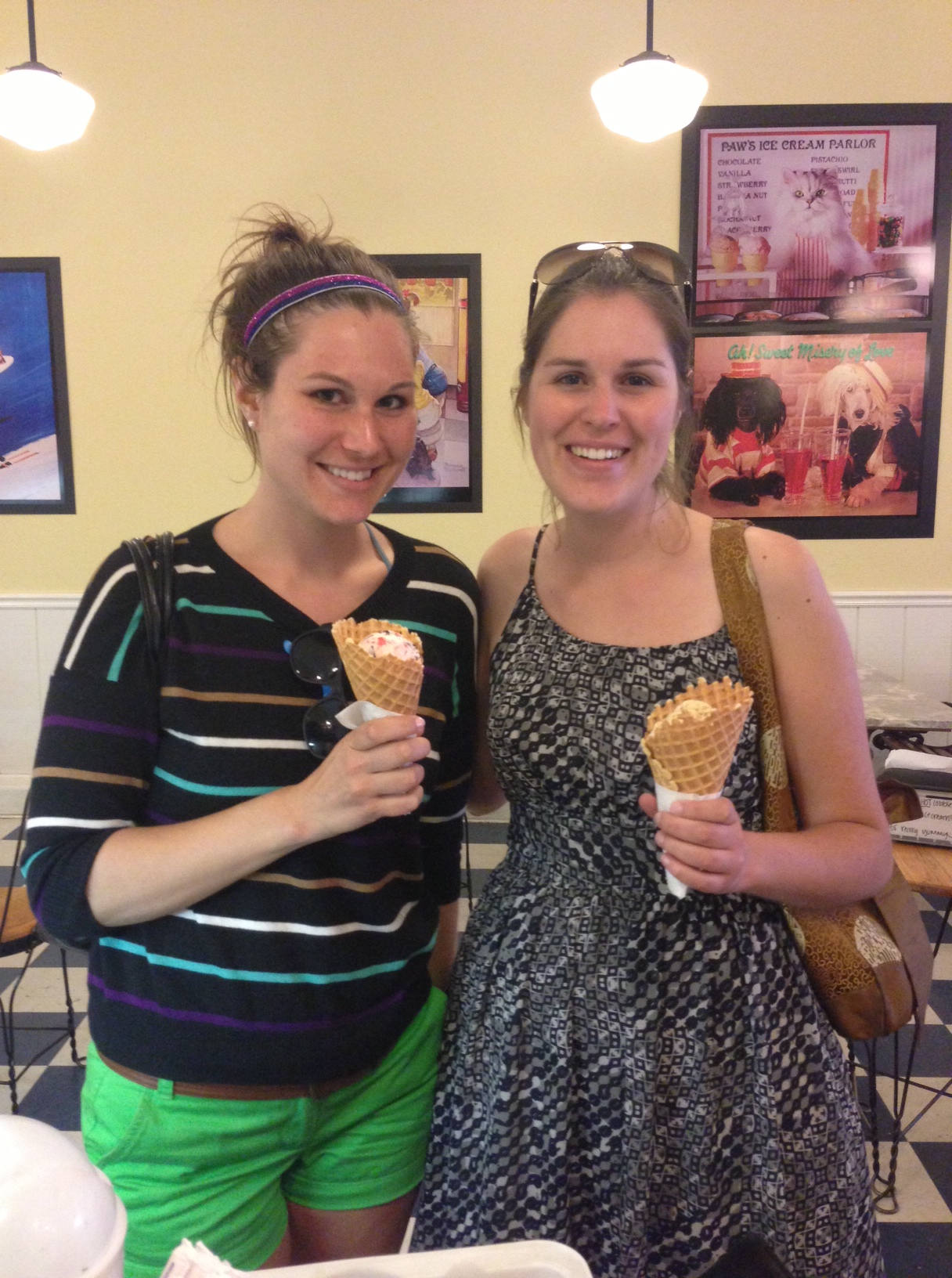
So there we have it. Here on out, I don’t want to hear anyone in my circle of acquaintances who runs to some degree tell me they aren’t a “real runner.” In fact, I don’t even want to hear the words “real” and “runner” in the same sentence ever again, unless it’s along the lines of: “That runner looks like she could use some ice cream real bad.”

Cones are, in fact, bigger in Texas.

Bad grammar and all, that’s an oft recited phrase I can get behind.

When did you start calling yourself a “real” runner?


In the Same Boat

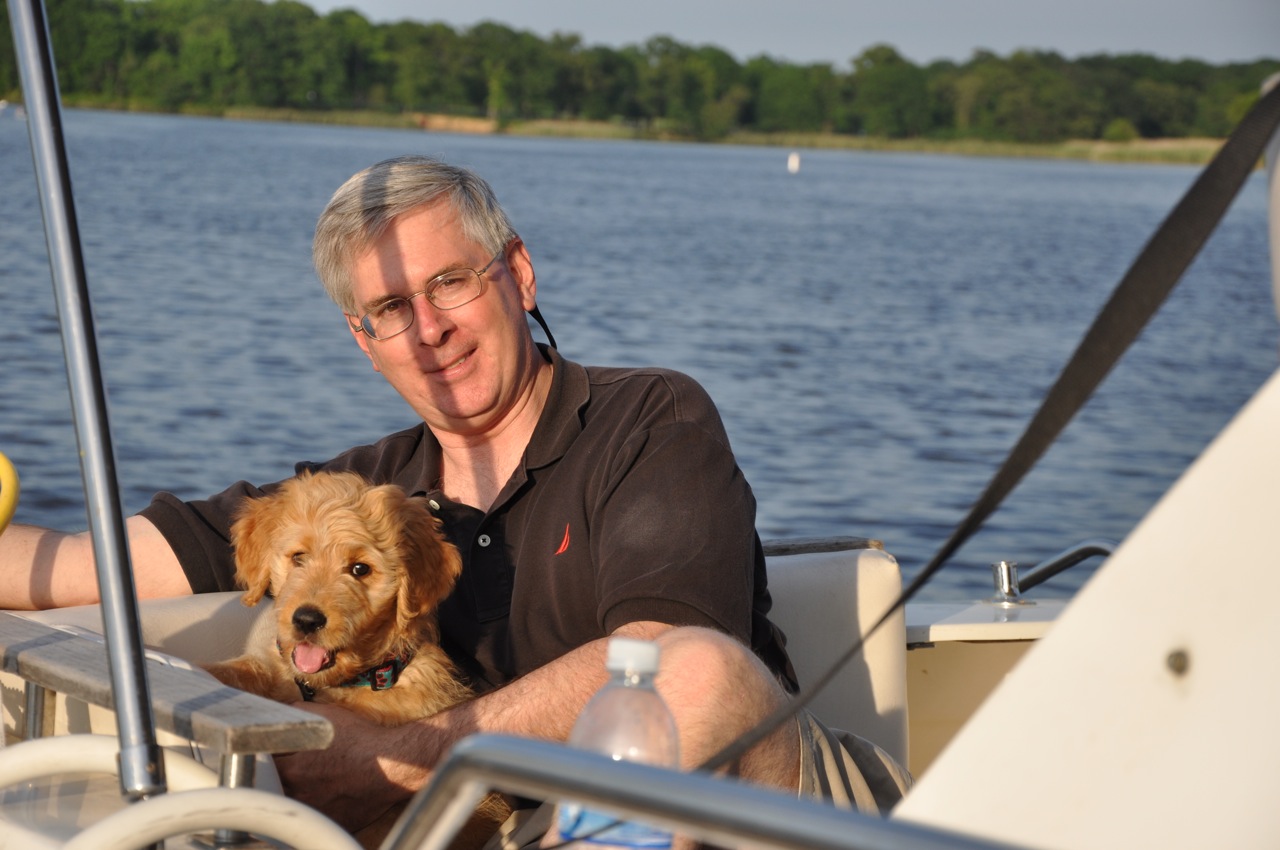
My father and I have innumerable things in common – our alma mater, our sense of humor, our appreciation of ABC’s 1990s Friday night line-up, our uncanny ability to down a 32-ounce baseball steak in one sitting – but when it comes to our favorite past times, we start to diverge. While I see no better way to spend a Saturday morning than by racing a new PR or working out with friends or logging a long-run en route to the marathon, my dad’s interests lie elsewhere. Forget the Central Park bridle path – my papa would gladly trade his first- and third-born children to spend the rest of his life on a boat.

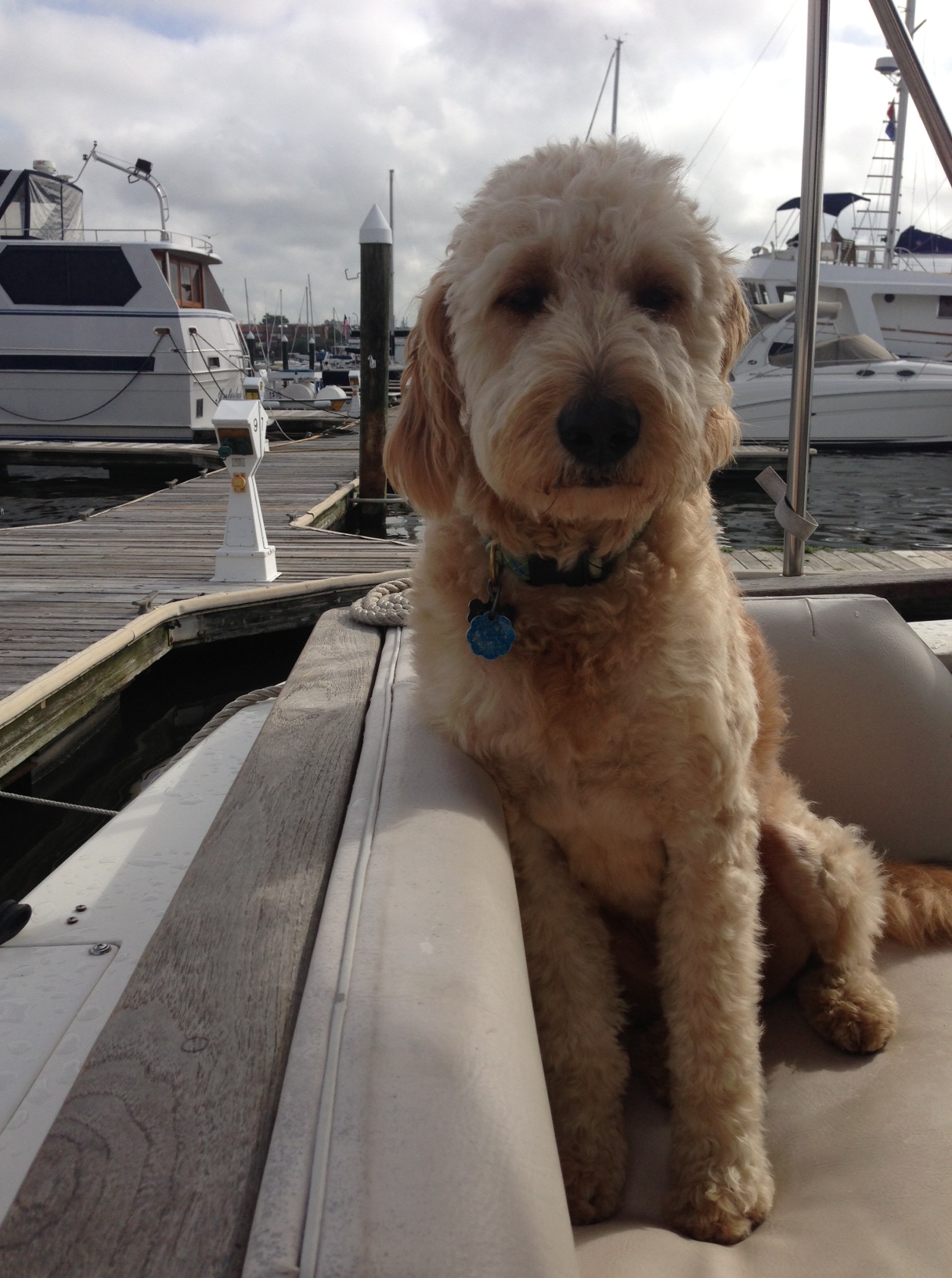
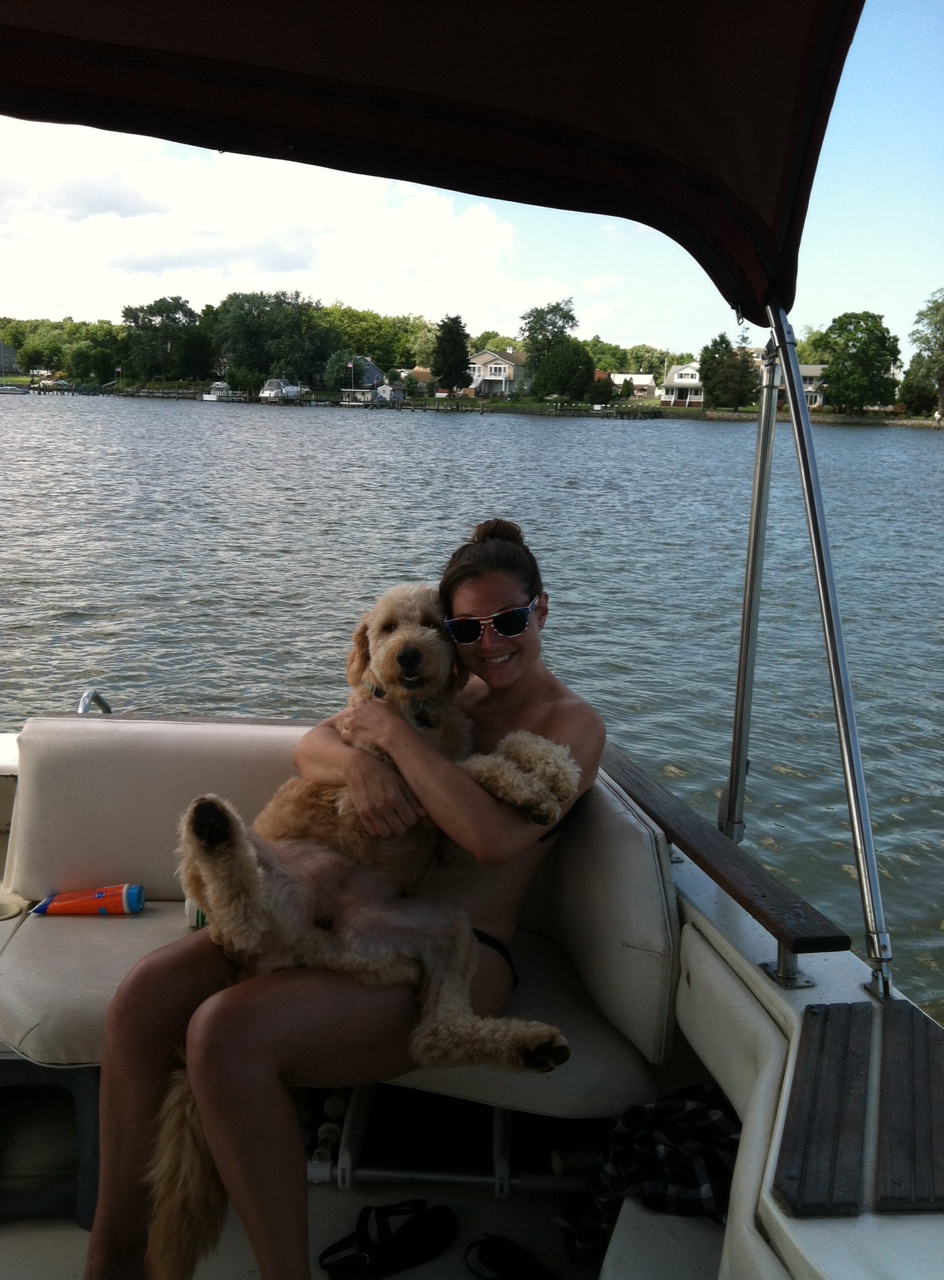
Goldendoodle optional.

The truth is, boating and running aren’t really all that different. Sure, one requires permitting and proximity to water and access to a motorized vessel and a hefty chunk of disposable income and the other demands – uh, nothing? shoes? – but when it comes down to it, the two diversions have more in common than you’d think.

So without further ado, I bring you the never-before-seen series, ‘How Running is a Heck of a Lot Like Boating.’ Also known as ‘Huh. I haven’t had a dog photo on this blog for a solid week. Let’s remedy that.’

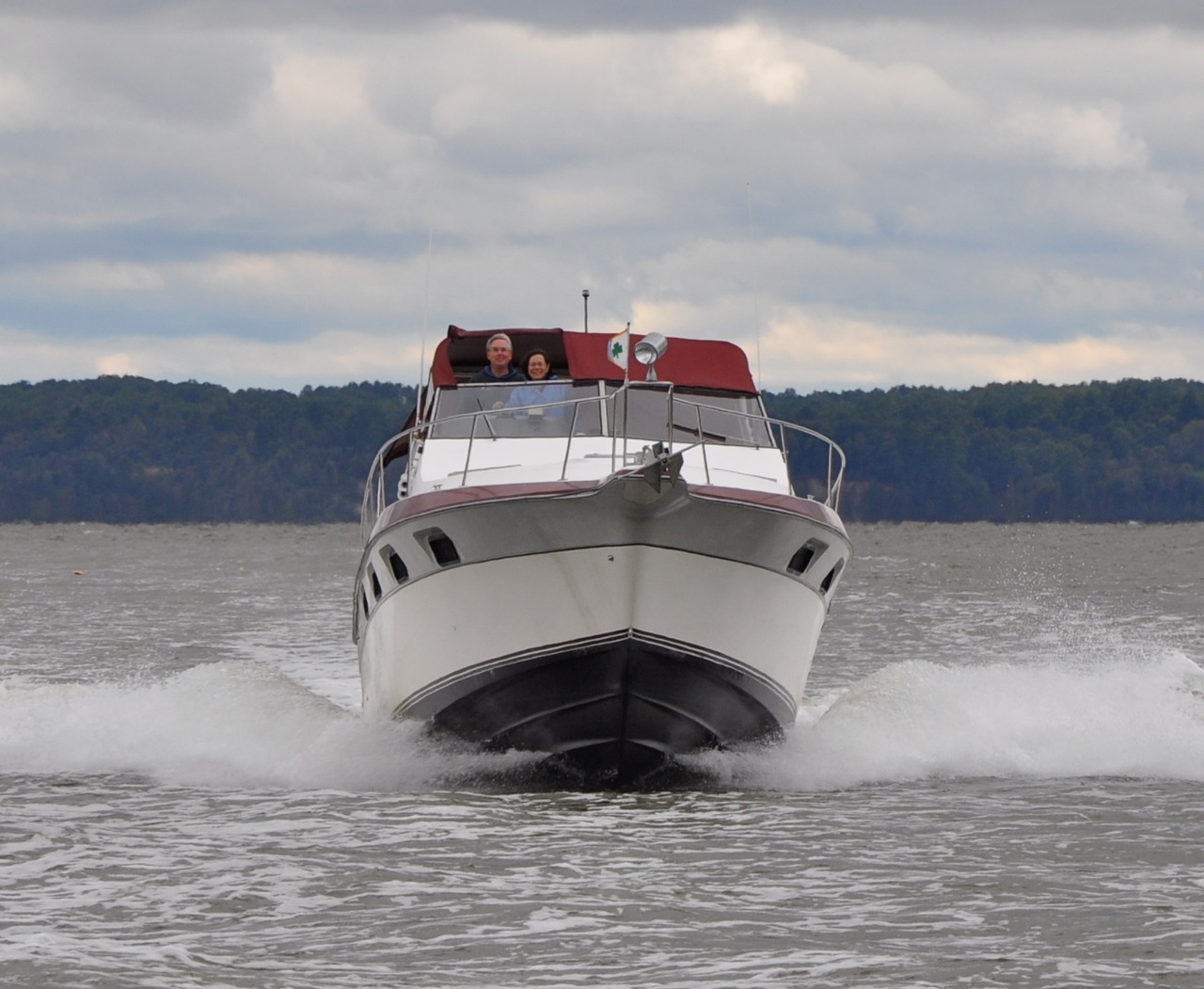
Boating and running are more fun when you’re going fast. You’ll hear it time and time again: to race faster, you have to train faster. My legs may love a slow morning jog the day after a hard workout, but nothing feels better than picking up speed, striding it out and cruising full tilt ahead to the finish line.

Hi Mom and Dad!
Yield left!

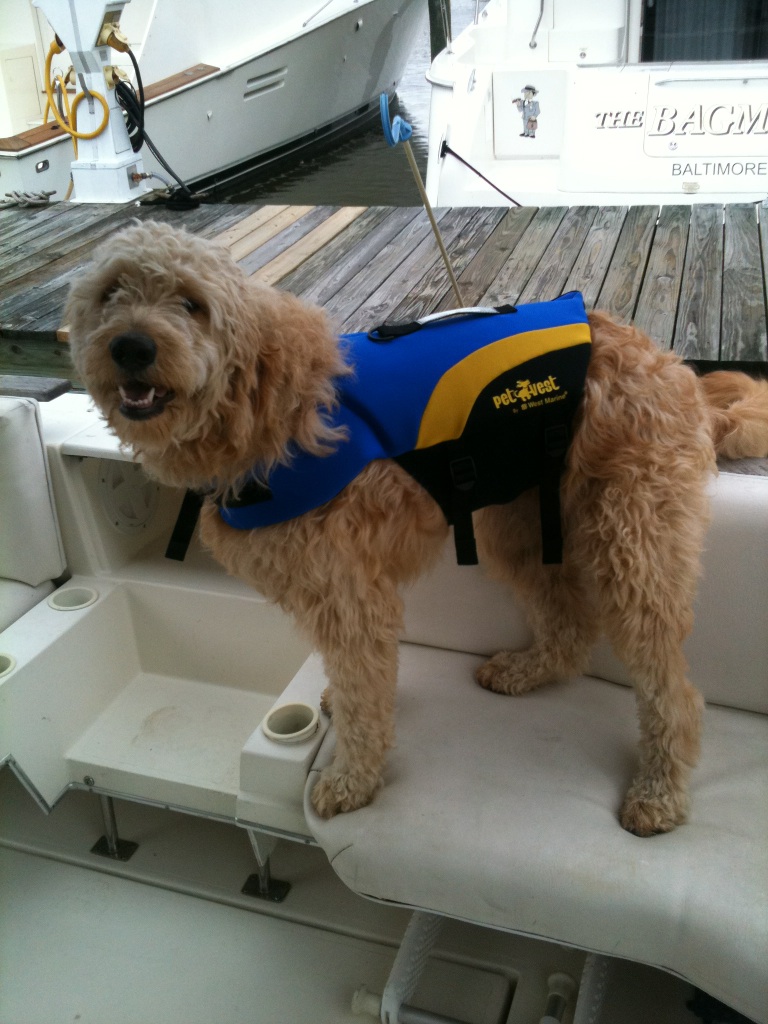
Boating and running require a lot of advanced planning. As Annie Van De Wiele once wrote, “The art of the sailor is to leave nothing to chance.” The same goes for training for a race. Unchartered waters are exciting when you’re talking about a new relationship or job, but when it comes to manning a watercraft or plotting your 16-week marathon training plan, you’re more likely to get out alive if you devise a strategy in advance and stick to it.

Keira brought her lifevest, like she planned.
This lady is getting out alive.

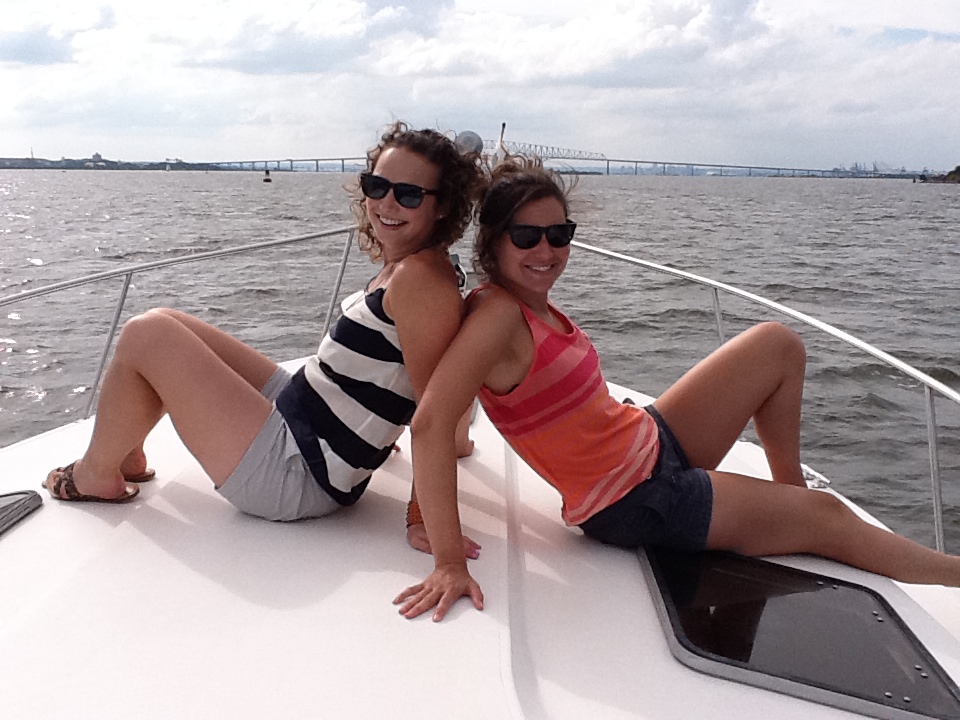
Boating and running do terrible things to your hair. Mine’s frayed and broken all along the elastic line; Keira’s is full of sea water and Baltimore Harbor hepatitis. I’d suggest you don’t touch either of us.

How embarrassing.
How embarrassing.

Boating and running are better with friends. Run 10 miles alone and have Duran Duran’s Rio cycling through your brain for a full 90 minutes. Run 10 miles with a buddy and watch the miles fly by. Boating, too, requires friends for tying the lines and mixing the cocktails and lounging on the front of the boat, which – surprise!  – is my personal specialty.

Fun fact: running friends can second as boating friends.

Boating and running can tire out even their biggest fans. I love running so much I write a blog about it, but that doesn’t mean I don’t get sick and tired of it from time to time. Boating, too, can cause even the most avid seafarer to grow weary. When that happens, take some time off, throw yourself into other pursuits, and you’ll feel the sea (or trail) calling you back again before you know it.

I. Demand. Dry. Land.

But while I’d argue that boating and running have an awful lot in common, there’s at least one key way they’re massively different, and that’s acknowledgement of other participants. If you’ve ever spent an afternoon on a boat, you know that the first rule of maritime law is to wave at every other seaman who crosses your path. (Second rule of boating: don’t call them seamen).

But the same apparently does not hold true in running. I don’t know if this is unique to New York City or what, but I find every single time I run by another athlete, she averts her eyes and presses forward. Now, I’m in no means demanding an enthusiastic high-five or a sweaty mile-6 embrace, but it seems to me a simple smile or nod of acknowledgement could work wonders in making our seemingly solitary sport seem more communal. Especially in late summer, when the odds are good that everyone running the Central Park loop with his own water bottle at 5 a.m. on Saturday morning is gearing up for the same exact Nov. 3 event, it seems we could silently but actively recognize our hard work with a smile or wave.

So that’s what I’m going to start to do. Who’s with me?

Ch-Ch-Ch-Ch-Changes

I’m no behavioral psychologist – or any psychologist for that matter – but spend a few minutes observing mankind and it becomes rapidly apparent that we are hardwired to resist change.

And why wouldn’t we be? Our species’ history is rife with evidence that change doesn’t always work out so well. Build the world’s largest passenger liner? Hit an iceberg. Invite your new neighbors to Thanksgiving? Catch smallpox.  Add apples to your diet? Get expelled from paradise.

It’s no wonder fiscal conservatives coast to coast are pushing to drop from circulation the U.S. penny: when it comes to change, most of us would simply rather go without. (Punny enough for you?)

There’s indubitably a good evolutionary reason behind human beings’ tendency to resist change: enter a situation with a tested outcome and your survival rate is bound to skyrocket; venture into uncharted territory and you could be eaten by a saber-tooth. Even today. They’re rampant in Brooklyn.

But while I have no doubt natural selection is the driving force behind our inherent fear of the unknown, a refusal to leave one’s comfort zone can also have disastrous effects. How many times have you witnessed a friend stay in a floundering relationship far too long because he was afraid to start over? How many times have you watched someone remain in an unfulfilling career because she didn’t want to begin again from scratch? How many times have you re-watched Jumanji on TBS, commercial breaks and all, instead of starting Breaking Bad like everyone tells you to? I rest my case.

Rarely is our resistance to change more apparent than in the realm of weight loss and fitness, where our bodies literally fight back against change at all cost. Run three miles after a month of idleness and your quadriceps will hate you. Swap out real dessert for fruit salad and you’ll go to bed feeling downright deprived. Push back dinner so you can go to the gym and your stomach will growl louder than those bulky bros in free weights. Our hominid bodies were wired back in our nomad days to retain calories and build energy stores, and when it comes to corporal memory, old habits die hard.

But sometimes it’s the hardest things in life that are the most worth doing. I’m not going to lie – changing my lifestyle between January 2011 and today was one of the hardest things I’ve ever done. In order to lose 30+ pounds and keep it off, I had to change practically everything I knew and loved: my snacking habits, my love of calorie-laden craft beer, my indolent lifestyle, my lackadaisical gym routine. And once I got my weight down and started training for the Marine Corps Marathon last fall, I had to shake up my routine further yet, sacrificing prime Friday night real estate for Saturday long runs and swapping Wednesday happy hours for mid-week hill sprints. It was change and it was hard, but when I crossed that finish line at 3:51 and immediately started planning for my next marathon, I knew it was worth it.

I still fight change – to do so is in my very nature as a human – but I’ve learned in recent years that sometimes a little change-up is worth embracing. That’s certainly the case in fitness, but the same can be said of most things in life, from date night destinations to professional advancement, the latter of which has been very much on my mind as I begin my new job at a new company in a new part of town.

I’ve just finished day four, and I’d be lying if I said it hasn’t been strange forging a familiar work environment for something  totally new and different. In fact, as I walked into my new building Monday, my nervous self could have used a little reminder that change is usually a good thing.

And what do you know? It got one.

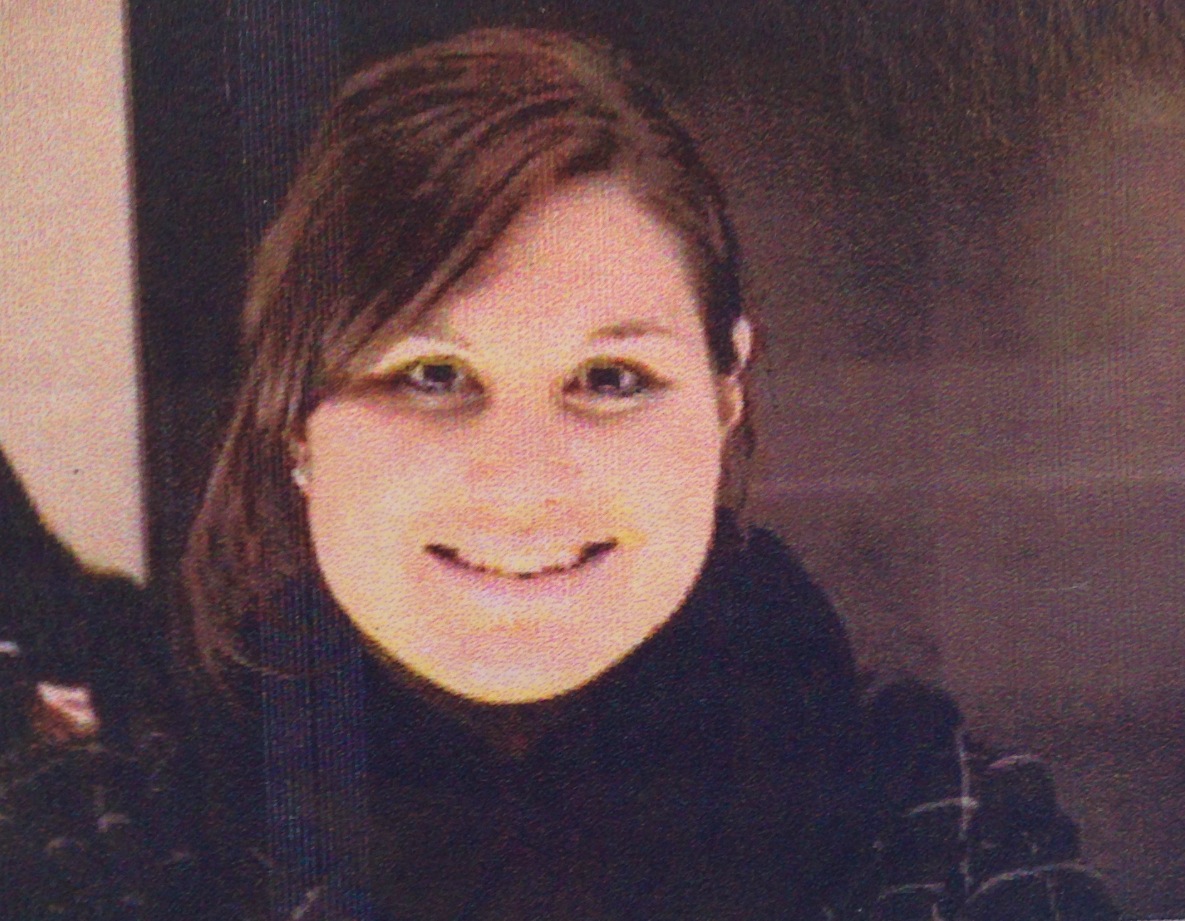
As I picked up my visitor’s badge on day one, the welcome desk opted to use a stored headshot of me from a guest visit to the building in 2009, rather than snapping a new photo. They printed my temporary ID badge with this flattering photo:

photo 1 (16)

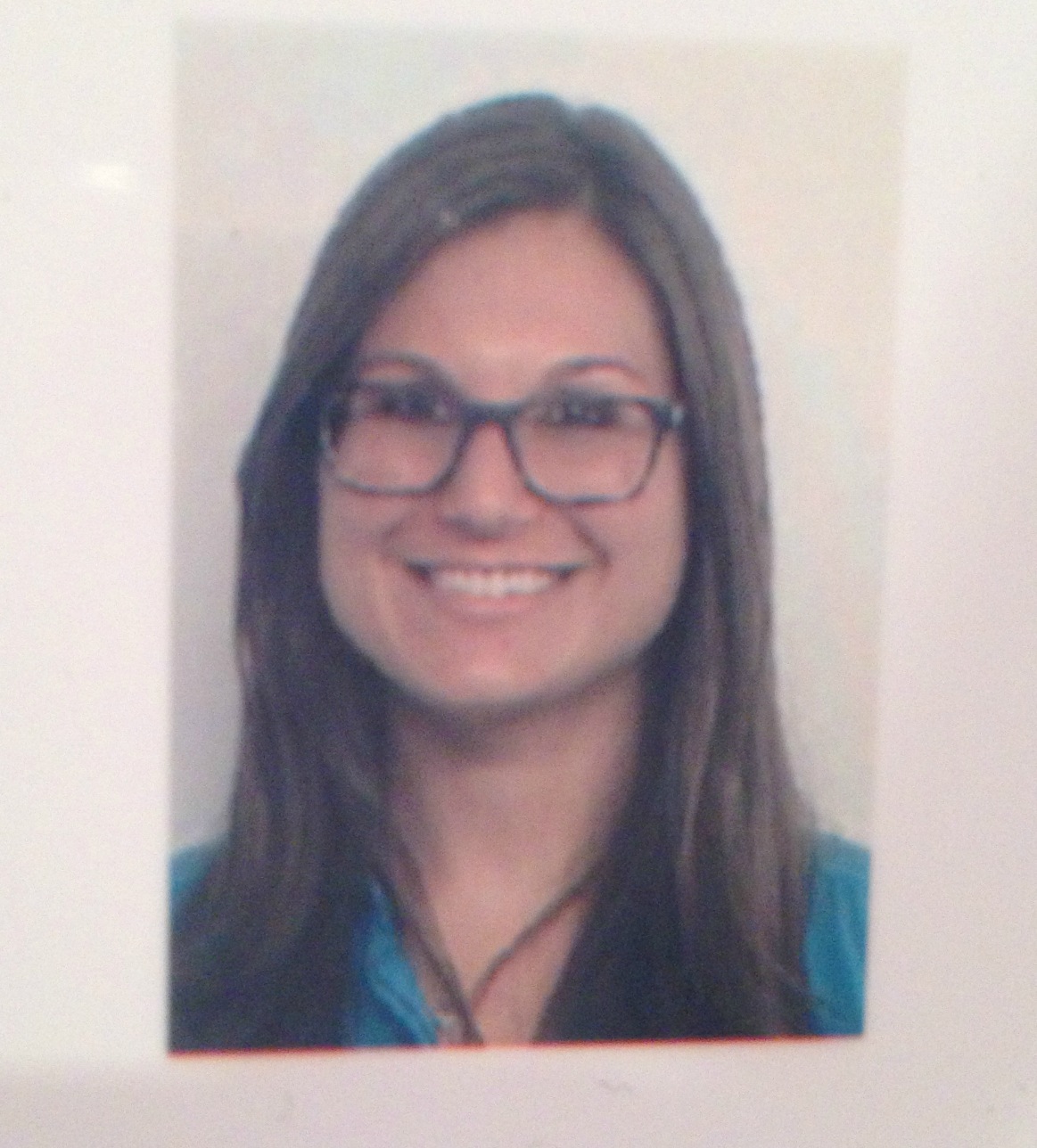
A few hours later, I went to pick up my new, permanent ID with an up-to-date headshot, and this is what I found:

photo 2 (18)

Nothing like a little pictorial evidence to drive the point home: despite our born and bred resistance to it, change is more-often-than-not a very good thing. Perhaps it’s time we all changed our attitude about it.

How are you embracing change this summer?


The Lies We Tell

No matter how moral or honest or candid you are as a human being, the chances are good you routinely say things you don’t really mean.

  • I’m not trying to PR on Sunday. I just want to finish.
  • Of course he’ll call!
  • No, no, you take the last slice of pizza.
  • I’m not mad at you, I swear.
  • I’ve thought it through. A 60-pound dog would totally thrive in my New York City apartment.
She just has to sleep on the couch.

Time to add one more to the list:

  • I’m going to race a triathlon on July 28th!

As you may recall, I announced in mid-May plans to train for a sprint triathlon along the scenic Rhode Island coast this summer in an effort to diversify my workout routine and enter marathon training stronger, fitter and less injury prone than I would have been had I spent the past eight weeks running nothing but reservoir loops.

“The spice of life!” I’d said. Turns out, the only thing in my pantry is wonder bread.

The truth is, I initially had full intentions of running/swimming/biking this weekend’s race and even went so far as to put in the preparatory work. For nearly two months, I supplemented my running routine with freestyle laps and harrowing Brooklyn bike rides, and were I being chased today by a bear along a quarter-mile waterway, an 11-mile bike course and a 3.1-mile roadway, there’s no doubt in my mind I could cross the finish line unscathed (unless that bear is riding a Schwinn five-speed, in which case, God help us all).

But there’s more to racing an event than physical preparation. In order to enjoy yourself during a sustained period of athleticism/dehydration/bear-drifting, you not only have to have built up the stamina and muscle mass to perform, but you need the right mental mindset as well. And I simply wasn’t going to have it.

Call me Debbie Downer, but after traveling out of the city for three straight July weekends, the idea of commuting up to Rhode Island for another excursion away sounded more depleting than refreshing, even if the people I was set to visit are among my favorite in the world. Throw into the mix the fact that I’m starting a new job bright and early Monday morning, and I knew I wouldn’t have been able to fully enjoy myself racing on Sunday in a whole different state. With my thoughts undoubtedly set to be elsewhere, the event didn’t quite seem worth the $85 registration fee, even if it came complete with a sweet neon swim cap. 

But while I won’t be throwing myself into the Atlantic Ocean this weekend with 500 of my closest friends, I in no way regret my summer of mock triathlon training. At this time last year, I could hardly sit down for fear of snapping in half my aching IT bands; this summer, I’ve swum and biked my way to a level of overall fitness that can’t be beat. And as I transition out of multi-sport training into 40-mile running weeks, that extra base of fitness is going to be a welcome buffer indeed.

So here’s to the second half of summer 2013. No looking back! Only looking forward here on out – as well as lovingly into a certain pooch’s adoring gaze.

Yes, Elton, I CAN feel the love tonight.

What curve balls has the summer thrown your training plans? Matt Harvey, this one’s for you.

Hot Diggity Dog

I’ve just returned from back-to-back weekends in Baltimore, and you know what that means: time to post a series of snapshots of an adolescent canine under the thinly veiled guise of offering legitimate running advice. Alright, team. Let the charade begin.

Today, in honor of New York City’s sustained triple-digit thermometric reading, I’d like to discuss strategies for maintaining fitness during summer’s hottest days. And what better spokeswoman for the impact of heat than a fur-covered quadruped unable to regulate her own internal body temperature? Enter Keira, stage left.

photo 4 (10)

Running in the summer is hard for a whole host of reasons—the ambient heat speeds up your heart rate, triggers dehydration and makes it difficult to keep your core temperature down, not to mention makes post-work happy hours all the more appealing—but with most of the major marathons slated for autumn, forgoing workouts simply because the federal government has issued a weather state of emergency is unfortunately not an option.

However, with some careful planning and a little creativity, it’s possible to keep your fitness levels elevated even when the mercury is on the rise. Below are some strategies as depicted by Anne’s best friend.

Wake up early. Tell your friends you’re training for a marathon and they’ll wonder if you’re crazy. Tell them you wake up at 5 a.m. on the weekends for your long runs and you’ll remove all doubt. Still, if you’re planning to log more than 10 miles at a time on a hot summer day, rising alongside the sun is a foolproof way to beat the heat. The aim is to finish your workout while your shadow is still two-times the length of your body. Returning to bed when you’re finished is a totally acceptable post-run recovery plan.

Wake up early, like Keira.

Dress well. It seems like just yesterday I was advising on winter running gear, but choosing the correct summer duds is just as key. Invest in good wicking shorts and tank tops, sweat-proof sunscreen, a face-shading visor (better than a hat, which won’t allow heat to escape) and enough anti-chaffing body glide to coat a small nation.

Dress well, like Keira.

Stay hydrated. This one is simply non-negotiable. Last Saturday, I met my girl Meredith for a long-run in Baltimore and–having  grown so used to Central Park’s abundance of fountains–didn’t think to bring my own fluids. Big mistake. Although we successfully tracked down one water fountain around mile 6, by mile 9 of my 10-miler, I was too light-headed to make it up a hill. For the first time ever, I had to slow to a walk mid-long run and regain my balance before pressing on. Don’t let it happen to you. Carry water with you, get a hydration belt, plot your route around fountains or plan to stop half-way and buy a bottle. Also, make sure you go into your run well-hydrated and replace both the water—and the salt—as soon as you’re home. Gatorade or seawater are both appropriate options.

Stay hydrated, like Keira.

Stay inside. If the weather truly becomes too hot to handle, there’s no shame in moving your workout indoors. I hate treadmills as much as the next guy, but as I also hate heatstroke, sometimes the machine is the lesser of evils. Can’t bear the electric belt? Jump on the elliptical or take a zumba class or practice your strokes in an indoor pool—whatever gets your heart a’thumpin. Or split up a long run and do five miles outside followed by five miles on the treadmill in rapid succession. You can’t sub out a scheduled run every single day and properly train for a marathon, but a few indoor substitutions on the hottest of days never hurt anyone.

Stay inside, like Keira.

How do you maintain fitness all July long? “By constantly photographing a moving model” is a totally acceptable response.

A Call to Mindfulness

If you’ve asked me this summer how I’m feeling, you probably got an answer that sounded something like this:

-I’m tired. I’ve had plans every work night for three solid weeks.

-I’m exhausted. I haven’t spent a single weekend in the city all month.

-I’m beat. I completed a swim drill, a bike ride and two runs in the last 24 hours alone.

-I’m spent. In addition to triathlon prep, I’m also three weeks into marathon training.

-I’m haggard. Using a thesaurus is hard work.

And I’m not the only one who’s spent the last month dogtired.

Just let me be.
Just let me be.

The truth is, it’s been a tiring few weeks for a whole host of reasons: heavy workouts, a jam-packed travel schedule, 90-degree running weather, a shortage of sleep. Throw into the mix the fact that my professional life is about to make a 180 as I’ve tendered my resignation at the wonderful publication that kickstarted my career, and it’s easy to find myself getting worn out as the summer’s dog days take hold.

Whomp whomp.
Whomp whomp.

Or at least, I’ve started to get worn out by the sheer pace of my daily routine.

But then I stop. Or at least, I’m getting better at stymieing those negative thoughts.

How, you ask? By making a concerted effort to focus on the positives every day when all I really want to do is complain louder than the next guy. For example, when I’m feeling down about logging less mileage this summer than at the same point last year, I reflect on the fact that all the swimming and biking I’m doing instead has undoubtedly helped keep me injury free. When I’m lamenting leaving behind my talented reporting staff to join a new company, I remember I’m going to be surrounded with and challenged by equally brilliant newshounds at my next employer. When I want to strangle the woman in front of me for talking on her cell phone in the quiet car, well … no positive spin there. Probably best you don’t read tomorrow’s Amtrak obituaries.

I mean it: forcing yourself to look for the positive when you’re feeling downright negative can be hard, but I think it’s a worthy exercise – and I mean exercise. Just like speed work and hill sprints and negative splitting, mindfulness is a skill that can be practiced and strengthened if you’re willing to put in the miles.

The experts – of which I am not – will tell you there are a lot of ways to do it: keeping a journal, meditating, working up a sweat. What’s been key for me these past few weeks is jotting down three things I’m grateful for each night before bed. I got the idea here, and I think it’s a video worth watching:

Will being a more positive person make me a better runner? Maybe not. But if I can leave the office at 8 p.m. and – rather than bemoan the long workday – take pleasure in stumbling across Manhattanhenge at the most serendipitously perfect moment instead, well, then that can’t be bad for my health, now can it?

20130711-225033.jpg

How do you practice mindfulness? Not to be confused with wine-full-ness, which is scheduled for Saturday night to celebrate a certain defector’s East Coast homecoming. You know who you are.

Not My Day

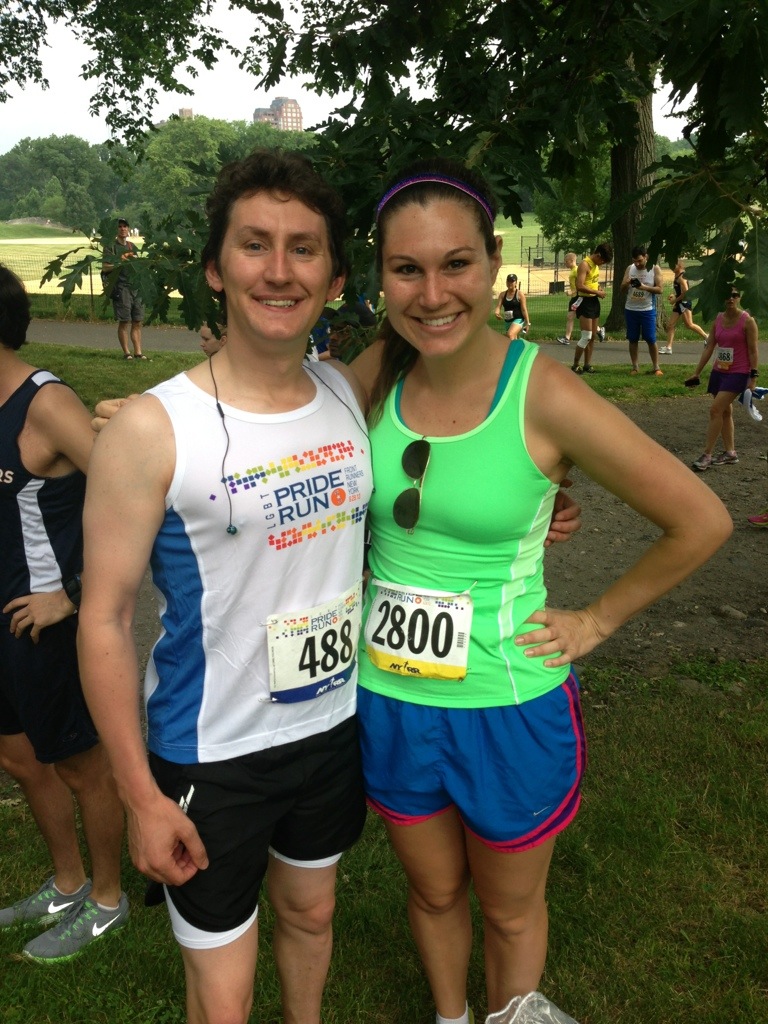
When I first woke up this morning for the NYRR’s and Front Runners’ co-orchestrated 5-mile Pride Run in Central Park, I felt a PR within my grasp.
20130629-131427.jpg

I’d stayed in Friday night, I’d treated myself to a massage, I’d made pasta for dinner, I’d picked out the perfect neon racing getup and I was in bed before midnight for a generously late 9 a.m. race start. The stars were aligned for a new personal best.

By the time I’d laced up and stepped out into the 80-degree morning heat, I’d somewhat edited my initial goal. ‘Skip the PR,’ I said to my already sweating neon-clad self. ‘Let’s just work to beat last year’s time for this very same race.’

Three miles in, I was panting and chaffed and getting passed on all sides by older gentlemen with mustaches. I could almost hear my imaginary running instructor Coach Kenobi telling me a strong performance wasn’t in the cards. ‘This is not the race you’re looking for,’ he said.

So I opted to revise my end-game one more time: Beat the Burt Reynolds lookalike in the red tank top and jorts quickly gaining on the left. I hunkered down, picked up my speed and – with the help of an enthusiastic friend sprinting alongside me for the final stretch – was able to finally get up some 11th hour speed in that last quarter mile.

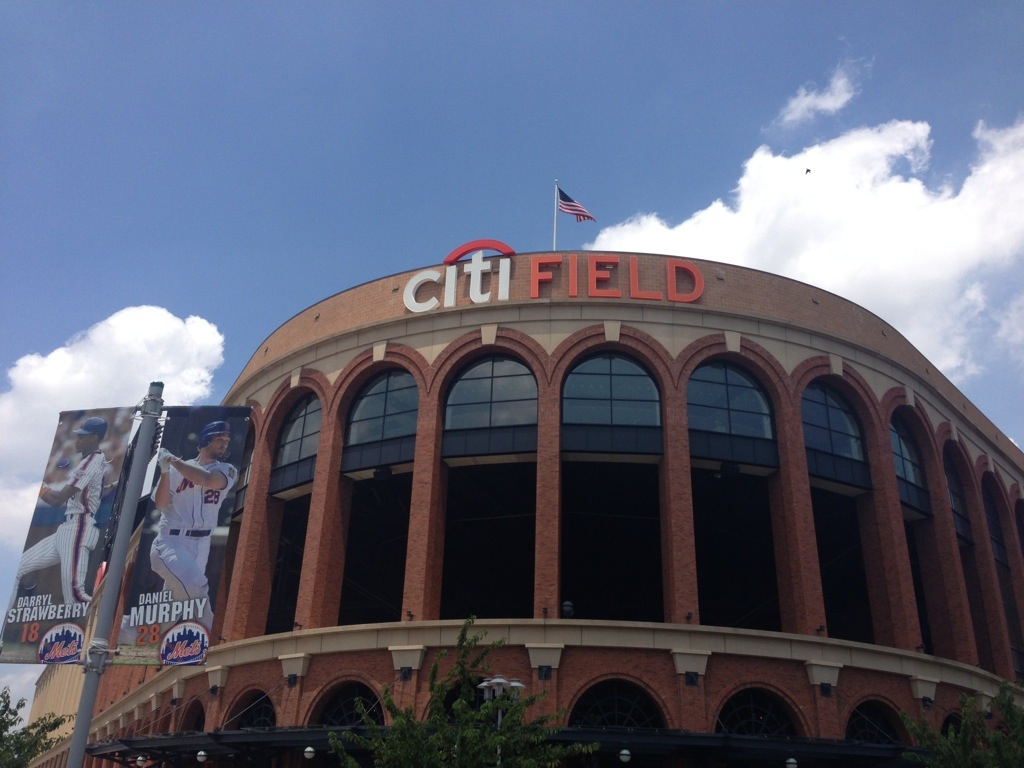
The fact that in the span of 45 minutes, I was forced to downgrade my race goal from a new PR to outpacing a 50-year-old man resembling Ron Burgundy should give you some good insider information on my final performance. That’s right, folks: I didn’t get a PR. I didn’t beat last year’s already disappointing race time. I didn’t win any medals, take home any prizes or earn the Citi Field ShackBurger I’m nonetheless planning to treat myself to in two hours’ time.

20130629-131512.jpg

But you know what? I did cross the finish line ahead of Tom Selleck. And you know what else? As I made my way through the post-race water station to drown my embarrassment 8-ounces at a time, who do you think tapped me on the shoulder? None other than Mr. Facial Hair himself.

‘You really picked up speed there!’ he said. ‘I saw you pass me in that last stretch and decided to try to keep up. Thanks for pushing me to my strongest finish yet. I think I might have gotten a new PR!’

(In truth, the conversation was more strained breathing than anything else, but fortunately, I’m fluent in Fatiguese.)

So there you have it. When you write a blog about your own training and your own fitness and your own goldendoodle relatives, it’s sometimes easy to forget it isn’t all about you. Today just wasn’t my day, it turns out. It was Alan Trebek’s. And that’s aOK, because us runners are in this thing together.

What lesson did you learn today?

Said No One Ever

There are a handful of phrases in the English language that I’d wager have rarely, if ever, been spoken aloud.

  • No thanks, I’ve had enough cookie dough for one day.
  • Franklin Pierce’s economic policies are worth emulating today.
  • No way, the blue ranger is my favorite, too!
  • Don’t you just love the smell of Manhattan in June?
  • I mean it! Your dog’s new haircut doesn’t look silly at all.
Back Camera
She knows the truth.

Here’s one more to add to the list:

  • I cannot wait until marathon training starts so I can finally have my life back.

Except that the aforementioned sentence has, in fact, been spoken aloud, and the speaker was none other than yours truly, and the whole exchange took place about 15 seconds ago. That’s right, folks. You’re livin’ through history.

As you may recall, I’m shaking up my running routine and spending the first half of the summer training for a beachside sprint triathlon scheduled for July 28 along the Rhode Island coast. For those of you unfamiliar with the sprint distance, we are talking a quarter-mile swim, an 11-mile ride and a 5K run in what I hope will take about one-third the time it takes me to run a marathon. Training should be a walk (/swim/bike) in the park, right?

Wrong. Not having much experience myself training for a multi-sport event, I (SURPRISE!) turned to my homeboy Hal Higdon for advice. There, I found his recommended 8-week workout plan designed for “runners who would like to test their fitness in a triathlon by adding swimming and cycling to their workout routines.” There might as well have been a headshot of me on the intro page. Plan selection = complete.

tri plan

I’m now on week 4 — why yes, I am writing this post from the comfort of a stationary bike — and let me tell you: training for a triathlon is not for the weak of heart. (Actually, your cardiologist probably could have told you that, too.)

Seriously though, I went into this summer thinking tri training would be a good way to ease my way into marathon training by building a base of core muscle groups while also allowing me more free time to enjoy all the perks a Manhattan summer provides.

Boy was I wrong. While it’s true my total weekly running mileage has been dramatically reduced since picking up two extra sports, the same can also be said of my free time. Unlike marathon training, when I tend to take two scheduled rest days a week, Hal now has me working out a full six out of seven. And many of those workouts involve more than one sport — say, swim 30 mins, bike 20 mins. But that’s less than an hour of training! — you say. — How can that be more time consuming than marathon training?

How? I’ll tell you how. My pool is on 92nd St.; my borrowed bike resides in Greenpoint. You do the math.

As a result, I’m breaking up most of my scheduled brick workouts and completing the first half before work in one borough and the second at night in another. I realize the expectation is athletes on tri plans will transition right from one sport to the next during training in order to simulate actual race conditions, but I also realize I don’t have a magic carpet to transport me over the East River during transitions. Pre-genie Aladdin, I feel your pain.

Now I’m not saying I haven’t enjoyed pieces of triathlon training. My Friday night bike ride around Roosevelt Island made me feel like a real, multi-sport athlete, strength training has made me feel strangely stronger, and swimming at the 92Y has taught me to strategically sidestep 90-year-old women in swim caps.

But the constant stream of two-a-day workouts is starting to wreck havoc on both my sleep schedule and my social life. And that’s why I’m about to repeat myself:

  • I cannot wait until marathon training starts so I can finally have my life back.

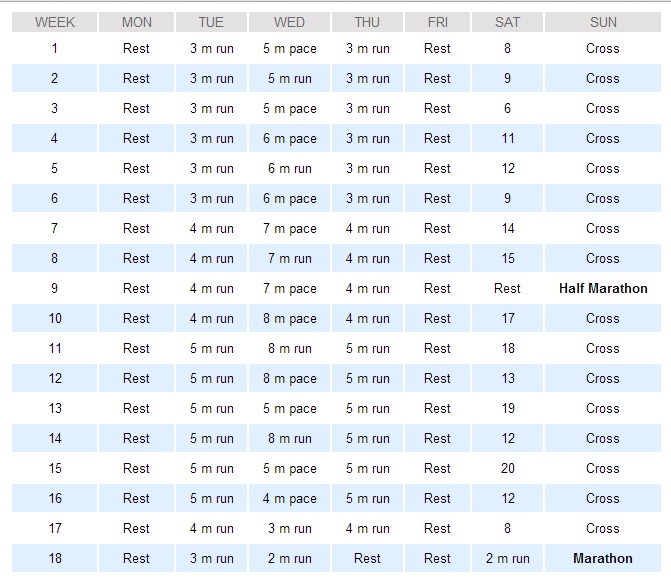
marathon planThat, and I love the smell of Manhattan in June.

How is your summer training progressing?